

By: Ammar Kannawi
Translated by: Wael Aqla
The Ain Dara archaeological site, located in northwestern Syria, 5 km south of Afrin, is an Iron Age site from the Syrian-Hittite period. Known for its temple and basalt statues, the site consists of two parts: an acropolis and a lower town built on a hill overlooking the Afrin River.
Historical Background
Following the Syrian archaeological excavations that began in Ain Dara in 1954 and led to the discovery of the temple, a preservation project for the site was implemented in the 1980s. Part of the Archaeological Mission building was designated as a visitor center, while the remaining rooms were used for artifact storage, laboratories, and a research center

Damage During Conflict
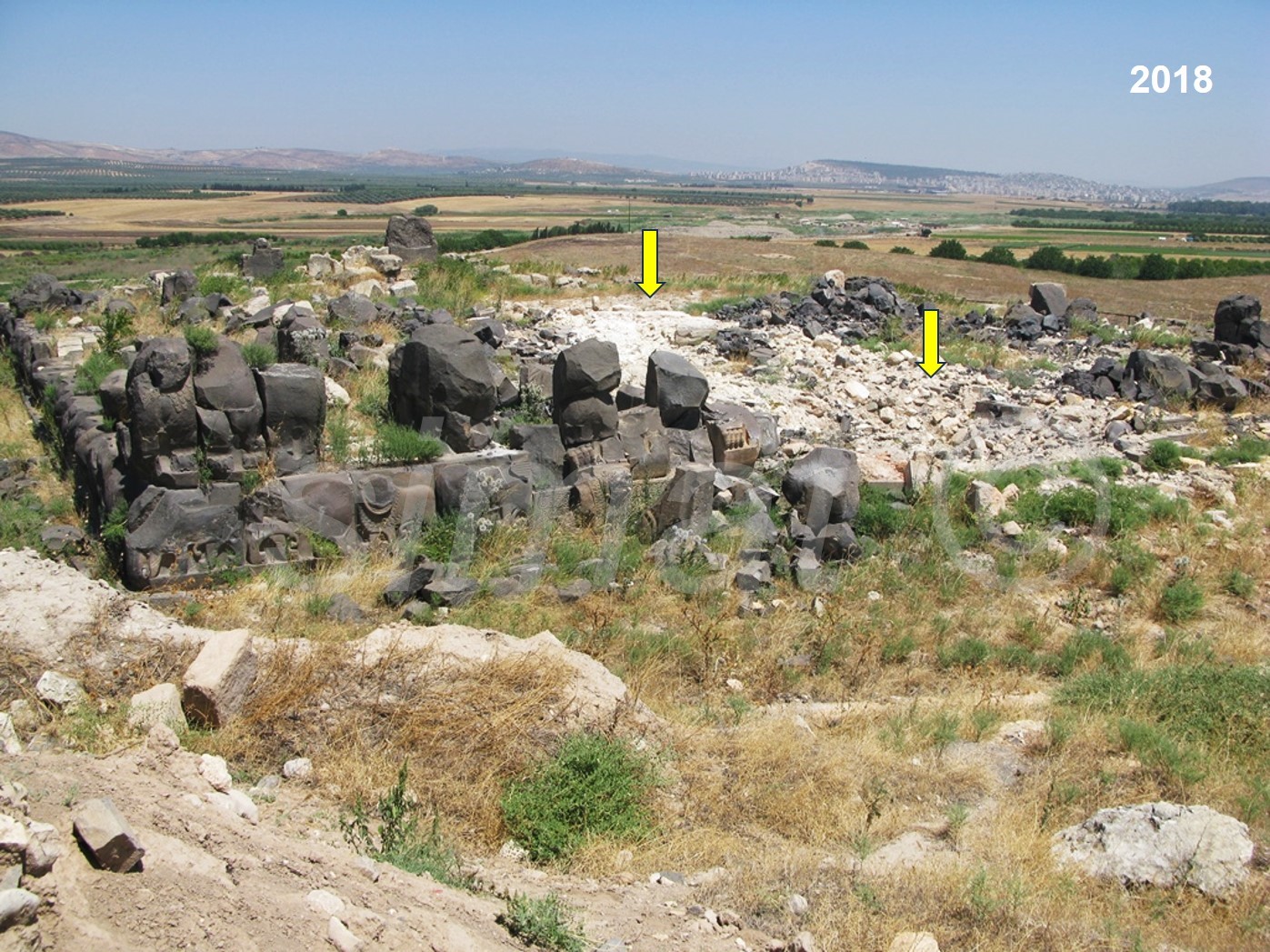
During the conflict, the site came under the control of militias affiliated with the Kurdish People’s Protection Forces (YPG) and was designated as a training camp and the mission house was converted into an administrative center with several service offices. In 2018, Turkish forces and several opposition factions launched a battle to take control of the Afrin region under the name “Operation Olive Branch”. During the battle, several airstrikes targeted the site, turning the entrance to the temple into rubble. In addition to destroying some of the sculptures on the site. However, the visitor center and storehouse were preserved, although a few items were looted.
In mid-December 2019, media reports surfaced about the theft of the massive basalt lion statue from the site, along with ongoing looting and bulldozing operations.
In 2020, we were able to conduct a survey and documentation of the entire site, which revealed that the site was heavily damaged as a result of extensive bulldozing operations using heavy machinery that destroyed the surface of the hill and the entire low city,

revealing many previously unknown basalt carvings, and the damage to the temple increased due to neglect and the scattering of basalt fragments belonging to its wall carvings destroyed by previous shelling on the perimeter and slope of the hill.
Risks and Damages
The Ain Dara temple has been repeatedly damaged by shelling from the training camp at the foot of the hill, as well as by indiscriminate projectiles from the village of Ain Dara and another military site south of Afrin city. In addition, the stones of the temple’s facade, previously cracked and shattered by weathering and shelling, continue to crumble and disintegrate.
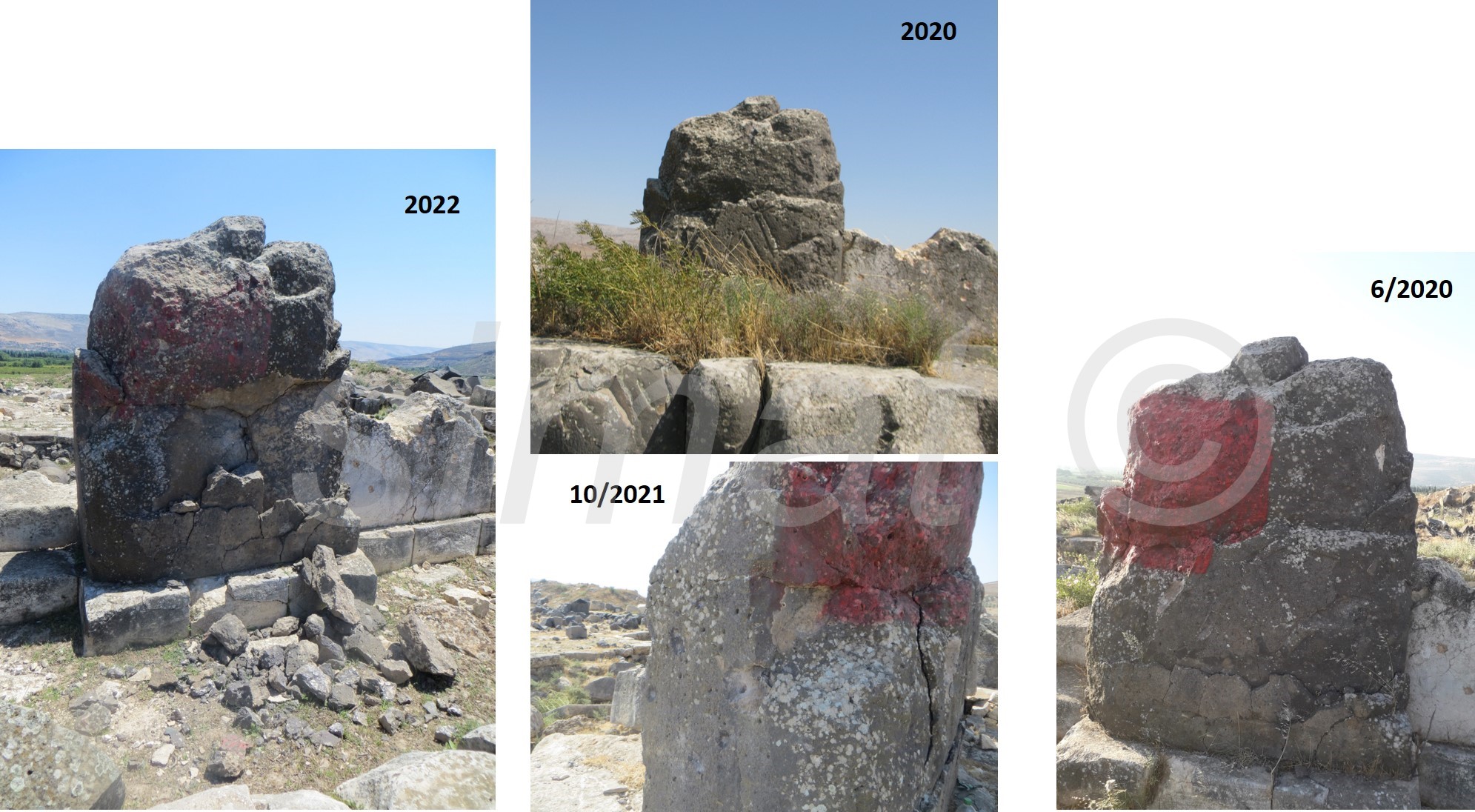
Through repeated site visits and documentation efforts since 2018, we have observed changes in the preservation state of the temple walls and a decrease in the number of stone fragments scattered beneath the walls. There is a threat to the safety of the archaeological structure due to the continued impact of projectiles on the exposed external façades. Another risk lies in the loss and disappearance of stone fragments belonging to these façades, particularly due to grazing activities on the hilltop. These activities are a result of the presence of a large camp adjacent to the site, established by shepherds from the Bedouin community who settled in the area due to the war and have used this limited geographical area as grazing land for their sheep.
Ain Dara is also one of the archaeological sites most affected by the conflict and factional disputes in Afrin due to its strategic location on the Afrin-Idlib Road. These conflicts led to the withdrawal of the Levant Front (Aljabha Alshamya) faction from the vicinity of Ain Dara in mid-2022 and the subsequent takeover of the site by Ahrar al-Sham, which caused additional damage, particularly to the Mission House. Infighting between military factions resumed in October after Hay’at Tahrir al-Sham attempted to take control of the Afrin region, briefly stationing its fighters at the Ain Dara site. The changing military control in the region and the use of Ain Dara Hill as a military position threaten the integrity of the temple, making it vulnerable to shelling and vandalism. As a result, it became necessary to close and protect the temple after all efforts to neutralize the site from the conflict and prevent its military use failed.
Protection Efforts
Working in cooperation with the Idlib Antiquities Center and with funding from the Kaplan Fund, we have protected and preserved the recently discovered sculptures unearthed during illegal excavation, prevent their smuggling, and recover several pieces that had been removed and concealed beyond the hill’s surface,
The protection measures aimed to shield the temple’s outer facades from stray projectiles, secure the site against unauthorized access or military use, and prevent grazing activities to preserve the current condition and retain stone fragments in place until comprehensive restoration efforts can be undertaken. These measures included:

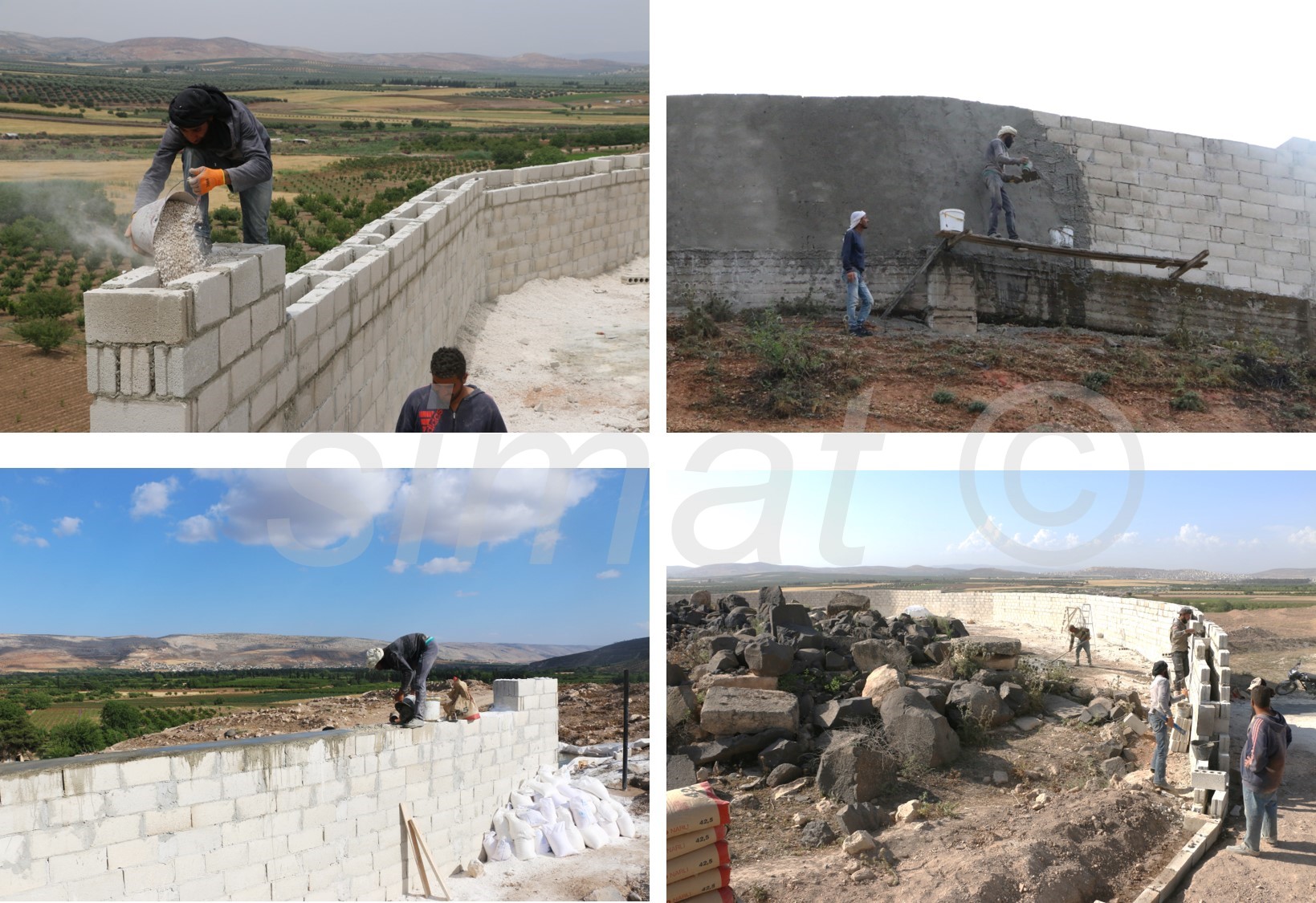
- Constructing a Double-Walled Barrier:
- A 210 cm high double wall made of concrete blocks was built, with the space between the walls filled with fine gravel and sand to form a 40 cm thick, three-layered barrier.
- This wall surrounds the exposed eastern, northern, and western facades of the temple, spanning 115 meters.
The wall was built on top of the concrete bases and bridges that surround the temple, which were previously built in the 1990s by the General Directorate of Antiquities and Museums to cover the temple with a canopy, which was stopped at that time because it violated the criteria for rehabilitating the archaeological site.
2. Installing a Metal Mesh Fence:
-
- Construction of a fence made of metal mesh reinforced with iron columns resting on free-standing concrete bases immersed in layers of modern backfill resulting from the site’s previous bulldozing operations. To cover the southern façade of the temple, which is not at risk from falling fireballs as it is hidden by a berm of backfill.
The fence, 70 meters long, connects the ends of the block wall and includes a lockable gate.

3. Adding Sandbag Barriers:
-
- Two sandbag barriers, 4 meters long and 2 meters high, were added to the upper terrace wall of the temple’s northern side to protect its elevated façade, which features two inscribed stelae.
These stelae have been previously damaged by projectiles and remain at risk of being targeted from afar.

Conclusion
Some may view the protection plan for Ain Dara Temple as controversial due to the addition of modern structures that obscure the temple’s historical façade and its closure to visitors. However, this intervention is an emergency measure designed to protect the site from further damage. All modern additions are removable and were implemented without altering the archaeological layers or causing lasting damage.
Additionally, the Ain Dara Temple is closed to visitors, with entry permitted only for shepherds. This measure was taken after three years of work at the site and the failure of most calls to protect the temple’s structure from nearby camps. Thus, constructing the wall was necessary and an available solution to secure the temple’s protection, preserve its current state, halt ongoing damage, and safeguard the stone fragments from the temple’s façade from being lost.
It should be noted that these measures are insufficient, as the temple walls urgently require restoration and emergency interventions to mitigate damage exacerbated by the recent earthquake. Limited funding has delayed these efforts.
We hope that the current protective measures will preserve the site until it can be rehabilitated post-conflict and utilized as a tourist attraction, benefiting the local population and the state. The discovery of significant sculptures has enhanced the site’s importance, potentially transforming it into an open-air museum.