

by: Ammar Kannawi
Translated by: Wael Alokla
Introduction
The Qalb Lozeh Church, located in the Jabal Al-Aala region northwest of Idlib, holds great historical significance. It is registered as a UNESCO World Heritage site in 2011 and is considered as the second most important Christian monument in Syria after the Church of Saint Simeon. The church is distinguished by its unique architectural style and excellent state of preservation, maintaining its full structure, except for the roof, parts of which remain in the southern colonnade. The church of Qalb Lozeh holds a special place for the local community as a symbol of Idlib’s cultural heritage and a source of pride for its residents.
The church gained renewed attention following extensive media reports linking the 2019 Notre-Dame Cathedral fire in Paris to Qalb Lozeh Church, suggesting that the design of the Parisian cathedral was inspired by Qalb Lozeh. This connection brought the importance of the church to the local community back into focus, further strengthening its status as a point of pride for the people of the village and Idlib as a whole. This event highlighted the need to raise awareness about the preservation of cultural heritage.
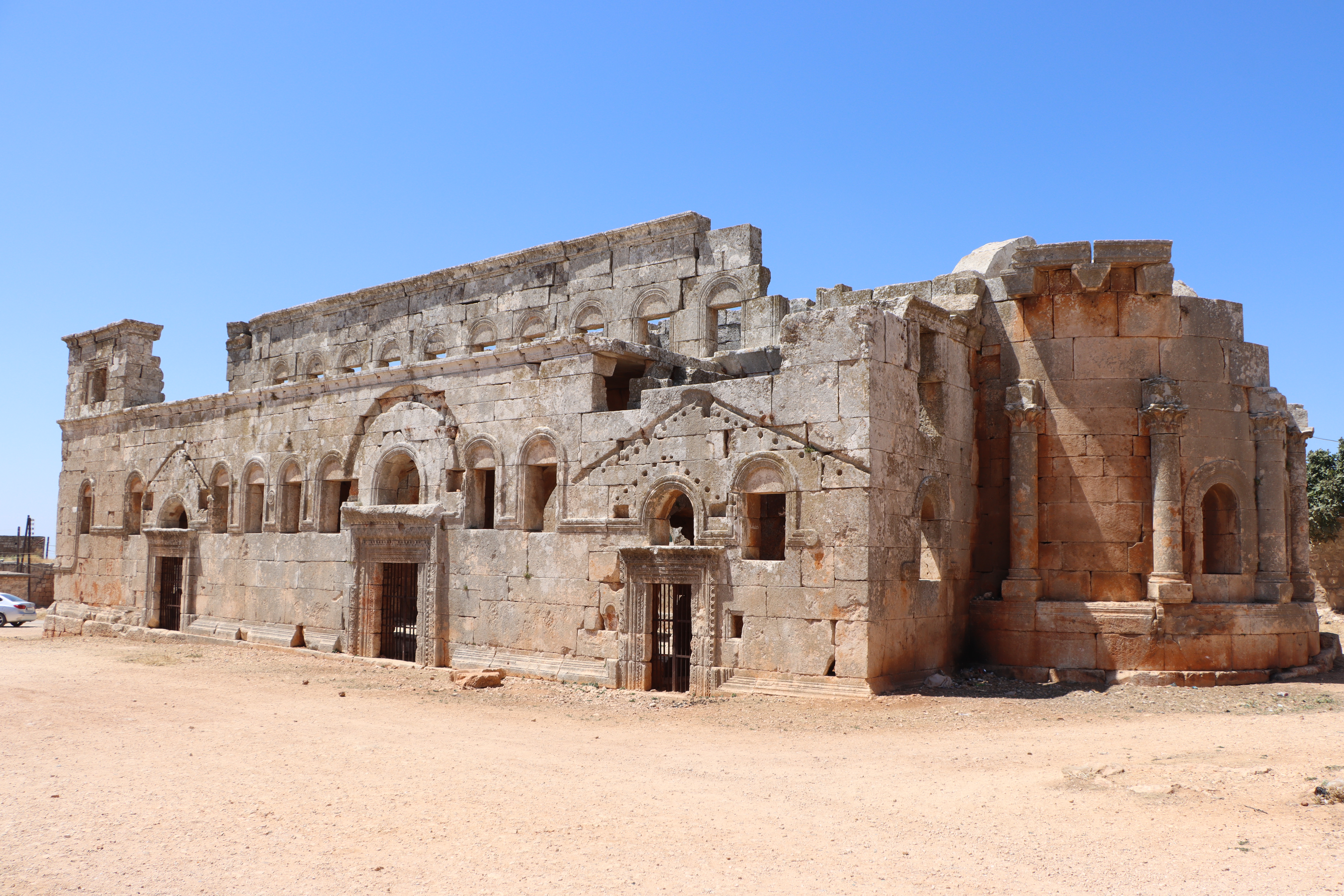
Current Situation
Despite the historical and architectural significance of the Qalb Lozeh Church, it was neglected by the local community during the war and subjected to encroachments in recent years. This is due the polarization in the local community in terms of their political allegiance regarding the Syrian conflict or religious affiliation, as some of them represent the Durze minority. Additionally, many of the residents have migrated, and many displaced people have moved into the area.
This lack of local involvement has contributed to the exploitation of the church. Between 2014 and 2016, the church was used as a livestock stable (for cows and sheep) by a displaced person who had settled in the area
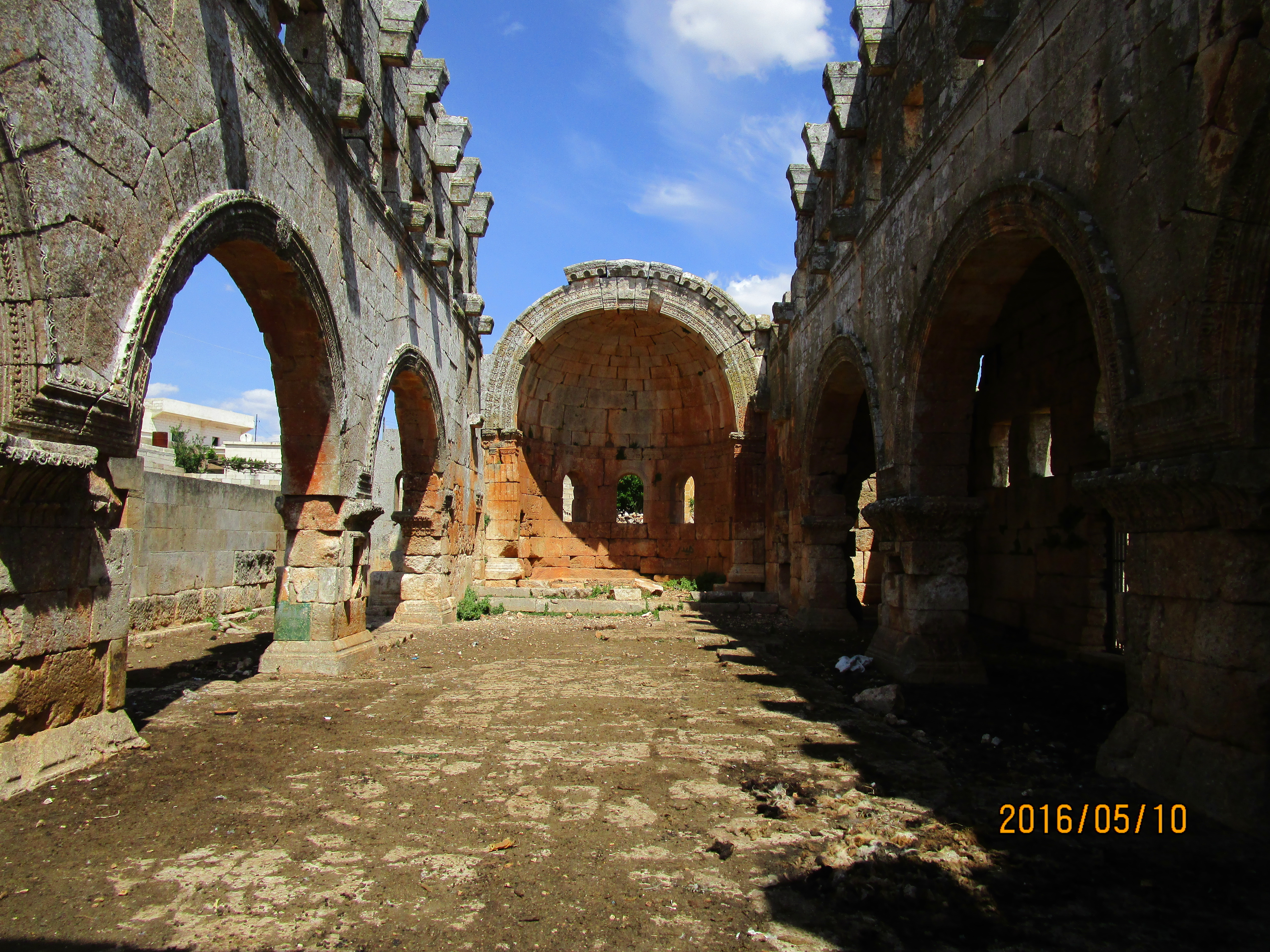
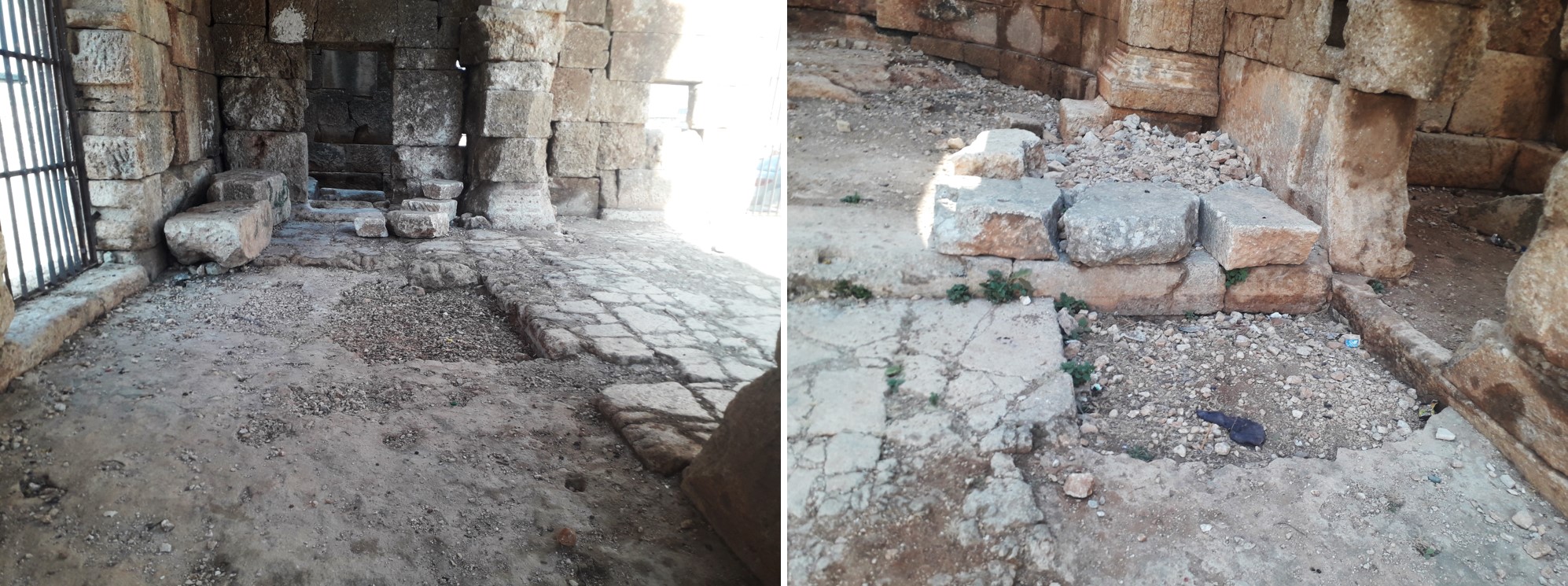
There have also been attempts to convert the church into a temporary education center for displaced children from rural western Aleppo, whose school was destroyed in early 2020. In addition, there have been illegal excavations and damage to parts of the church, including the floor and the stone staircase leading to the central apse.[1]
Political Situation and its Impact on Qalb Lozeh
The residents of Qalb Lozeh and neighboring villages faced persecution during the Syrian revolution due to their status as a religious minority (Druze). The area has suffered from neglect and has been inhabited by foreign fighters with extremist ideologies who enforce their beliefs by force. Tensions in the region escalated after an elderly man and his wife were killed by foreign fighters for religious reasons in mid-2022. This incident prompted Hay’at Tahrir al-Sham (HTS) to intervene to protect the local population, setting up security checkpoints in the area and expelling many of the foreign fighters. HTS leader Abu Mohammad al-Jolani also met with local leaders and reached a reconciliation agreement that included promises to improve services in the area. This shift in the political climate has fostered the idea of restoring Qalb Lozeh Church as a tourist and historical site in cooperation with the local community, taking advantage of HTS’s more moderate approach to improve its domestic and international image.
Project objectives
This project aims to carry out emergency interventions in the damaged parts of the church, by restoring the missing parts of the floor due to a set of small and large pits caused by previous excavations. The goal of the project is to rehabilitate the church and clean it of debris and some recent graffiti, allowing it to regain its status as a tourist site for the local community. This will help protect the church from further exploitation, as has happened in the past.
Work Phases
- Documentation: A comprehensive documentation of the church was conducted through photography of all parts and elements before and after the work, including 360-degree photos of both the interior and exterior. Additionally, short videos were taken to document all architectural and decorative elements.
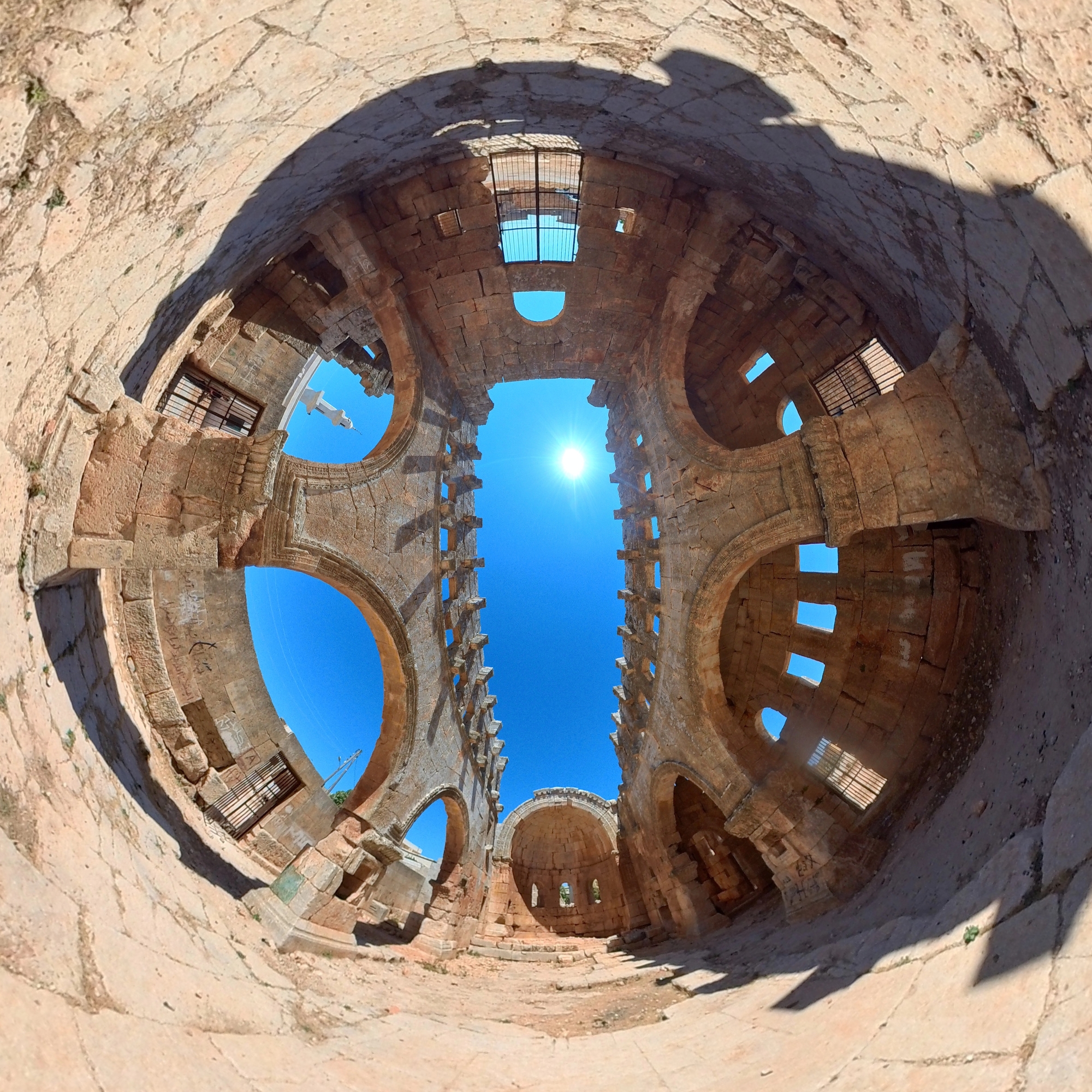
2. Cleaning Operations: The entire church floor was cleaned and debris and dirt removed. The excavations and damage to the floor were clearly visible, and local workers from the village were hired to do the cleaning in coordination with the local council of Qalb Lozeh. (picture 5)
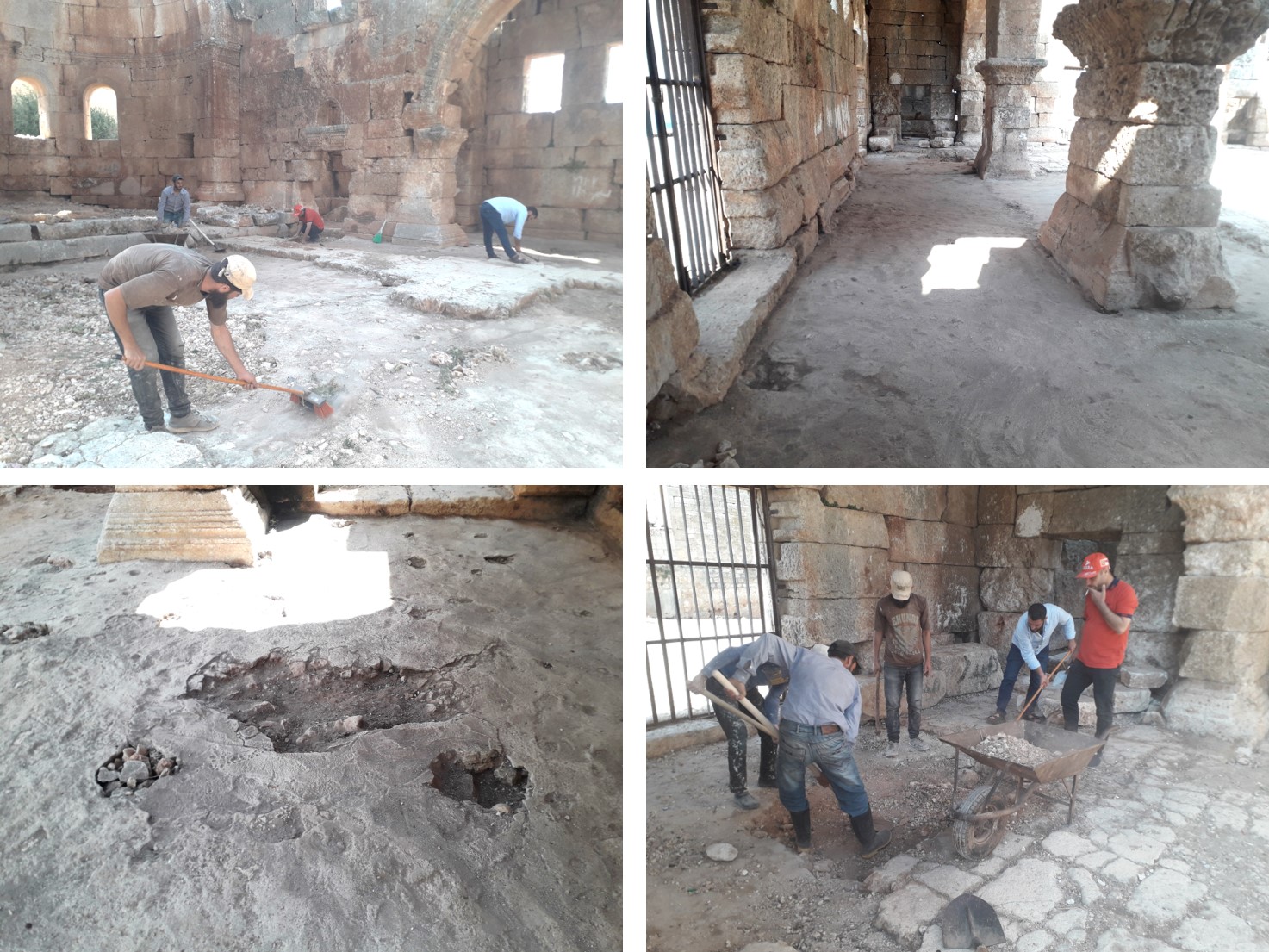
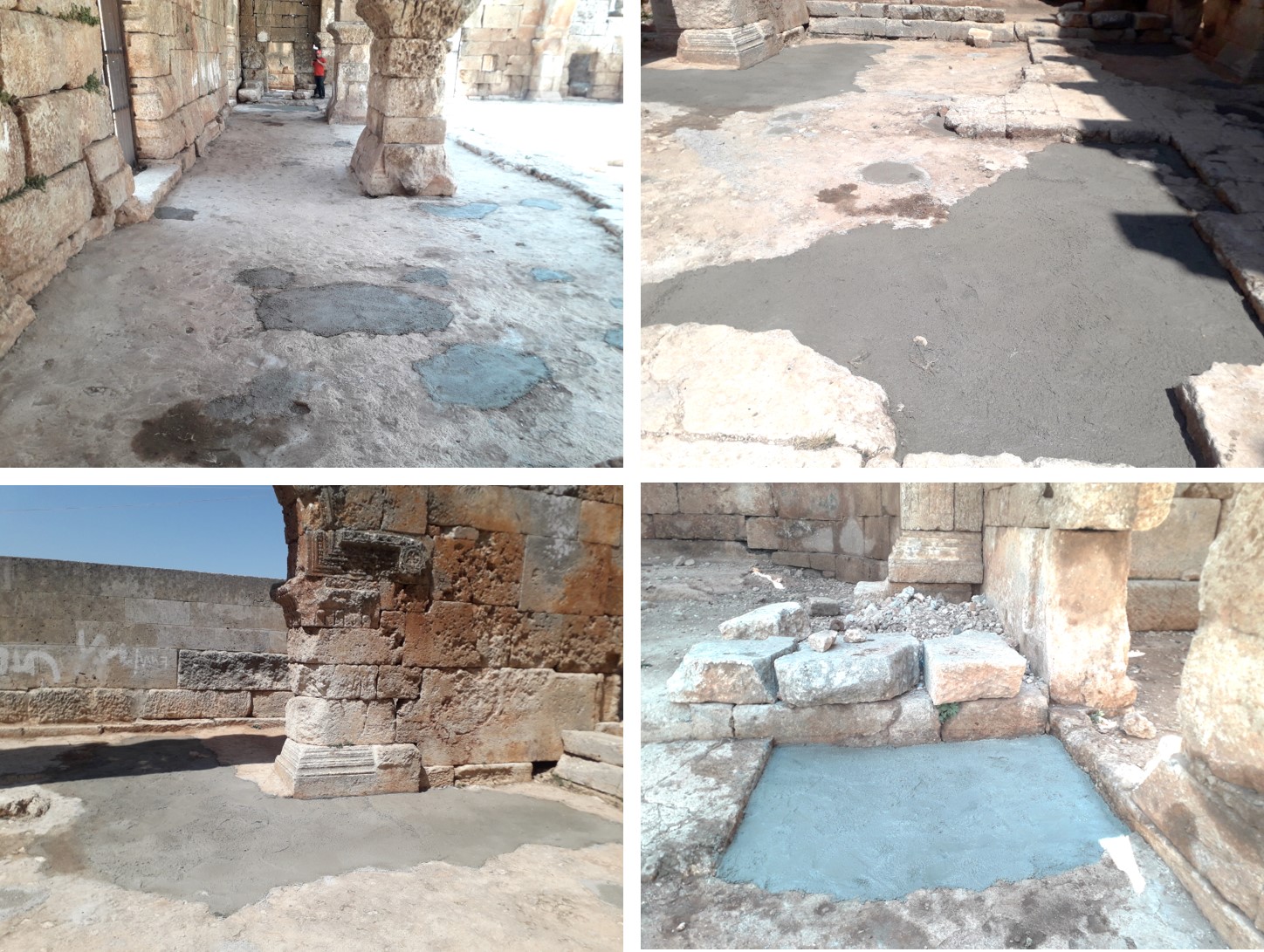
3. Floor Restoration: Dozens of pits on the church floor were identified, cleared of modern debris, and then paved with stones and covered with mortar. (picture 6) These restoration efforts targeted only the previously damaged parts of the floor, without altering the original stone flooring. This restoration process will prevent further damage and allow the church to accommodate large groups of visitors, especially on school trips.
.
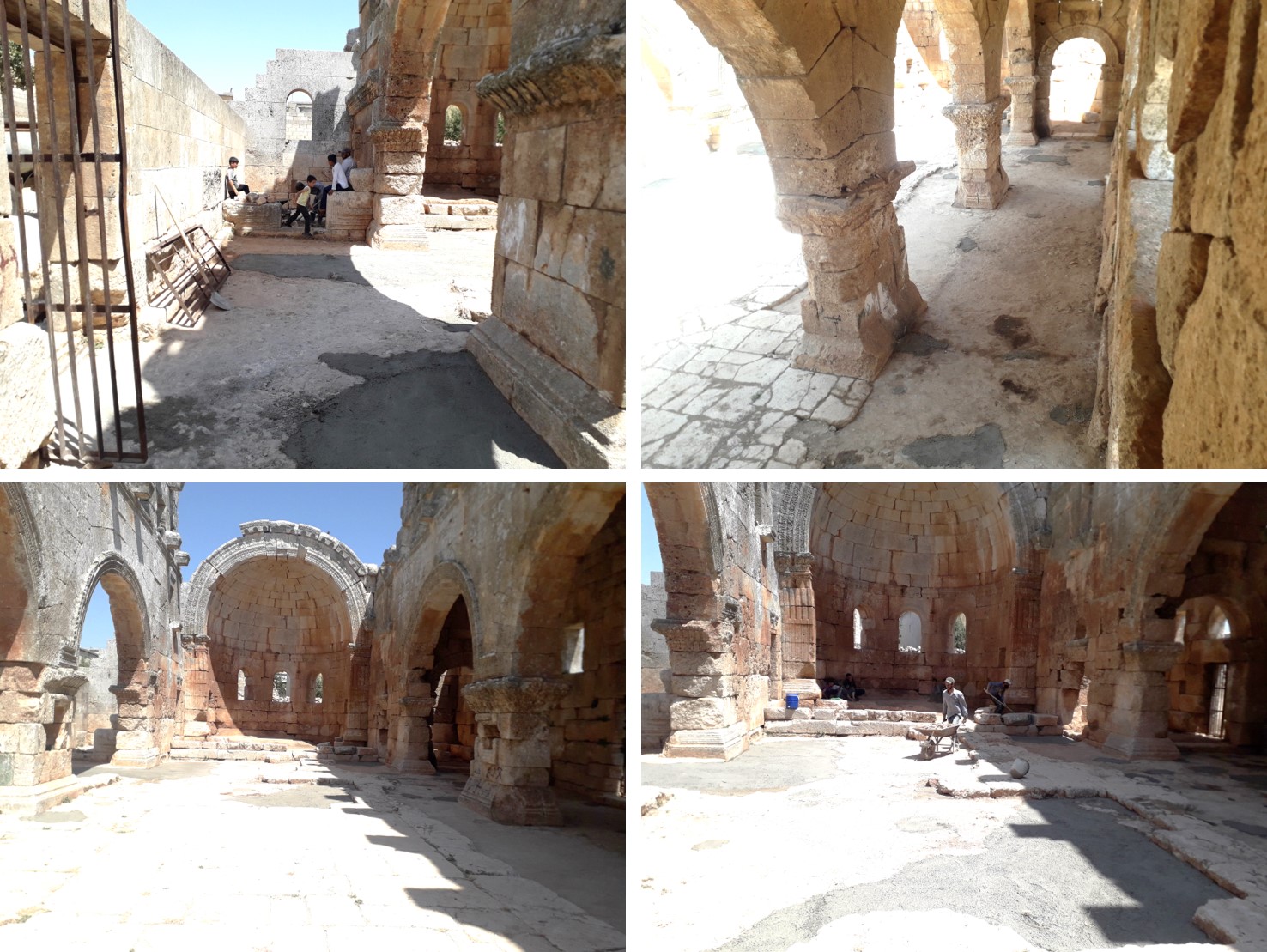
4. Post-Earthquake Survey: A complete survey of the church was conducted after the devastating earthquake, confirming that the church had not suffered any additional damage because of the quake, based on comparisons with previous documentation.
Conclusion
Rehabilitating the church and employing it as a visitor reception center helps protect the site from the threat of unjust exploitation, which still exists by some people or parties that seek to either profit from the building or obliterate the building’s historical identity as one of the most important Syrian churches. The project helped to involve and support the local council, consisting of a group of villagers in managing the church’s file and placing it in their custody. The reopening and rehabilitation of the site in cooperation with them enabled the people of the area to revive the idea of preserving the cultural heritage in their area after the violent campaign they were subjected to by the extremist group in the previous period.
[1] For more information about the damage to the Qalb Lozeh church, please see our report published on the SIMAT website, Documenting the Current Status of World Heritage Parks, Park No. 6 – Upper Mountain, (2020) https://2u.pw/0oKnChD