
Prepared by: Ammar Kannawi
Translated by:Wael Alokla
Location and Background:
Qal’at Sim’an (Saint Simeon Castle) is located on Mount Simeon, which forms the northern section of the limestone massif, about 35 km west of Aleppo and approximately 7 km northwest of Darat Izza. The castle, along with several surrounding sites, was listed as a UNESCO World Heritage Site in 2011.
Since the beginning of the Syrian revolution, the castle has faced several infringements, such as illegal excavations and destruction of some parts, including the floor of the eastern basilica of the main church. As the revolution progressed, the castle became a training center for some armed opposition factions until today, which differs according to the military situation on the ground. This is due to the castle location between different fronts with the YPG and the regime forces. In 2016 the Castle has exposed to two rounds of aerial bombardment, causing significant damage, especially to the Column of Saint Simeon and parts of the cruciform church.
In 2020/2021, we conducted an emergency intervention and documented the current state of the castle with funding from the Kaplan Fund. The state of the castle has been maintained throughout, but the recent earthquake damaged some of the castle’s buildings: some walls and architectural elements collapsed, cracks appeared in some buildings, and the western arch surrounding the St. Simeon’s Column in the Crusader Church collapsed
The Earthquake Damage:
The earthquake that occurred on February 6, 2023 caused extensive damage in northwestern Syria, exacerbating the already dire humanitarian situation in the region. The earthquake also damaged some archaeological sites, including Qal’at Sim’an where different parts of the castle collapsed, and cracks appeared in some areas. Given the significance of Qal’at Sim’an, we conducted several field visits immediately after the earthquake to survey the damage. By comparing the current state with previous photographs, it was determined that most damage occurred in parts previously weakened by bombardment or illegal excavations beneath the walls, which had compromised their stability, making them less resistant to seismic activity.

Key Damaged Sections:
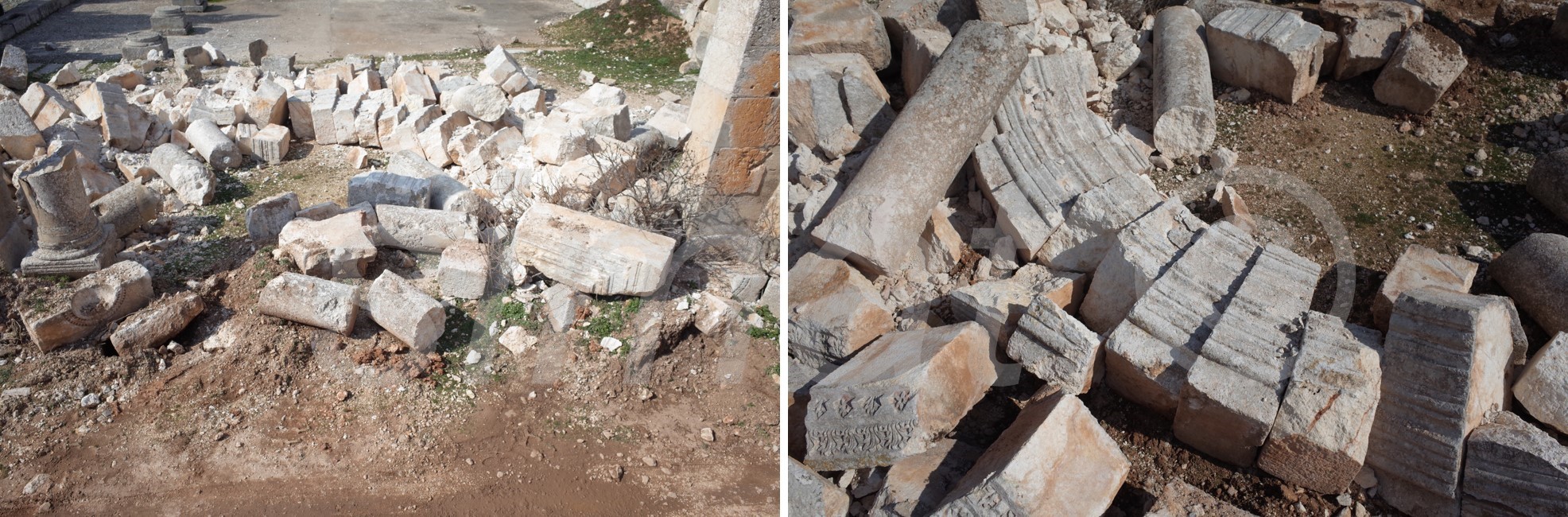
The Western Basilica Arch: The western arch of the octagonal structure surrounding the Column of Saint Simeon sustained prior damage from the 2016 airstrike, weakening its stability. Thus, we had previously carried out emergency interventions to strengthen the arch against weather conditions and minor vibrations caused by potential shelling. However, the intensity of the earthquake exceeded the arch’s capacity to withstand it, causing the collapse of the columns and the arch westward. The stones of the arch are still aligned on the ground in their previous order
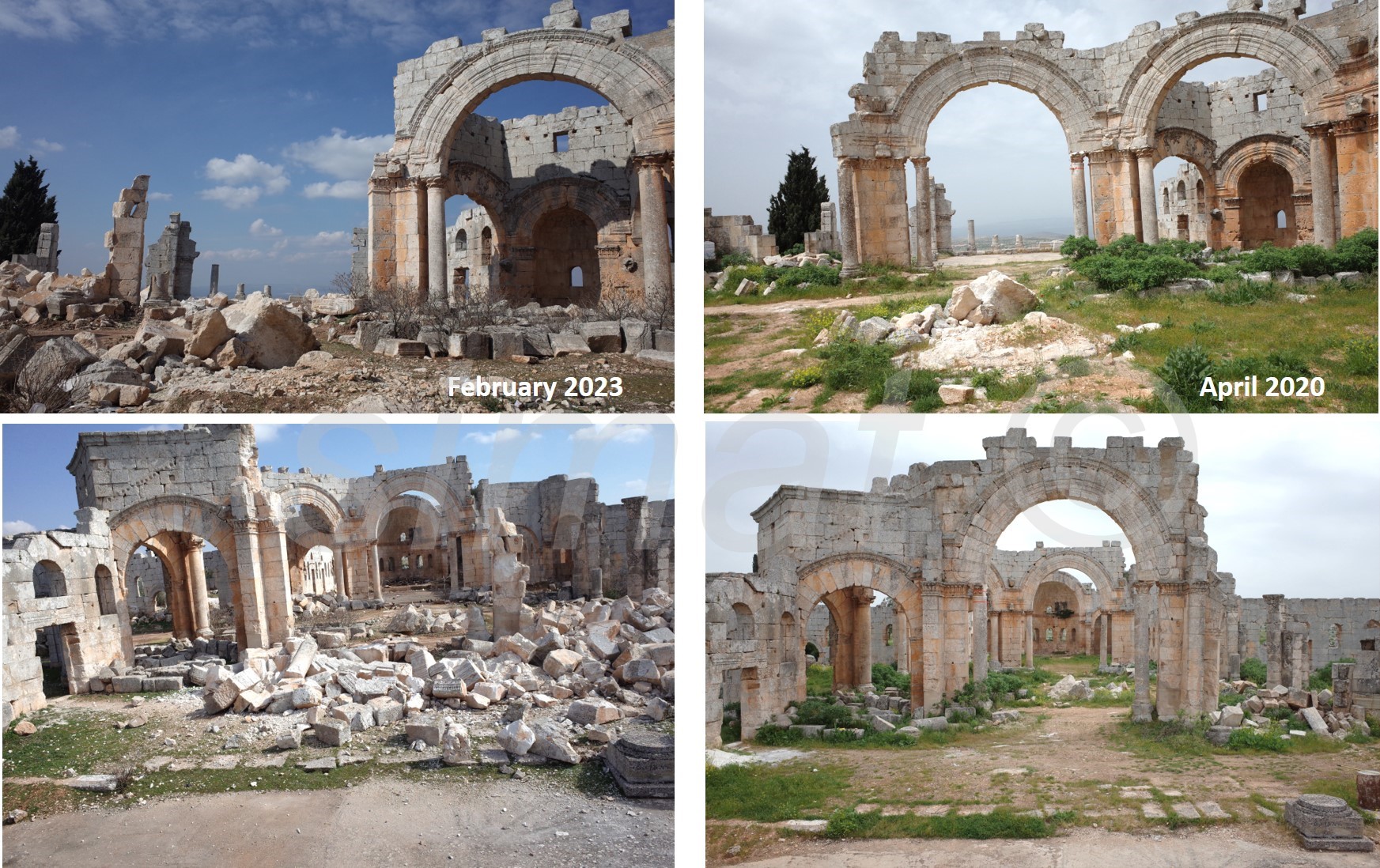
with some stones broken, but most parts of the arch and columns remain relatively intact and suitable for future restoration if preserved in their place.
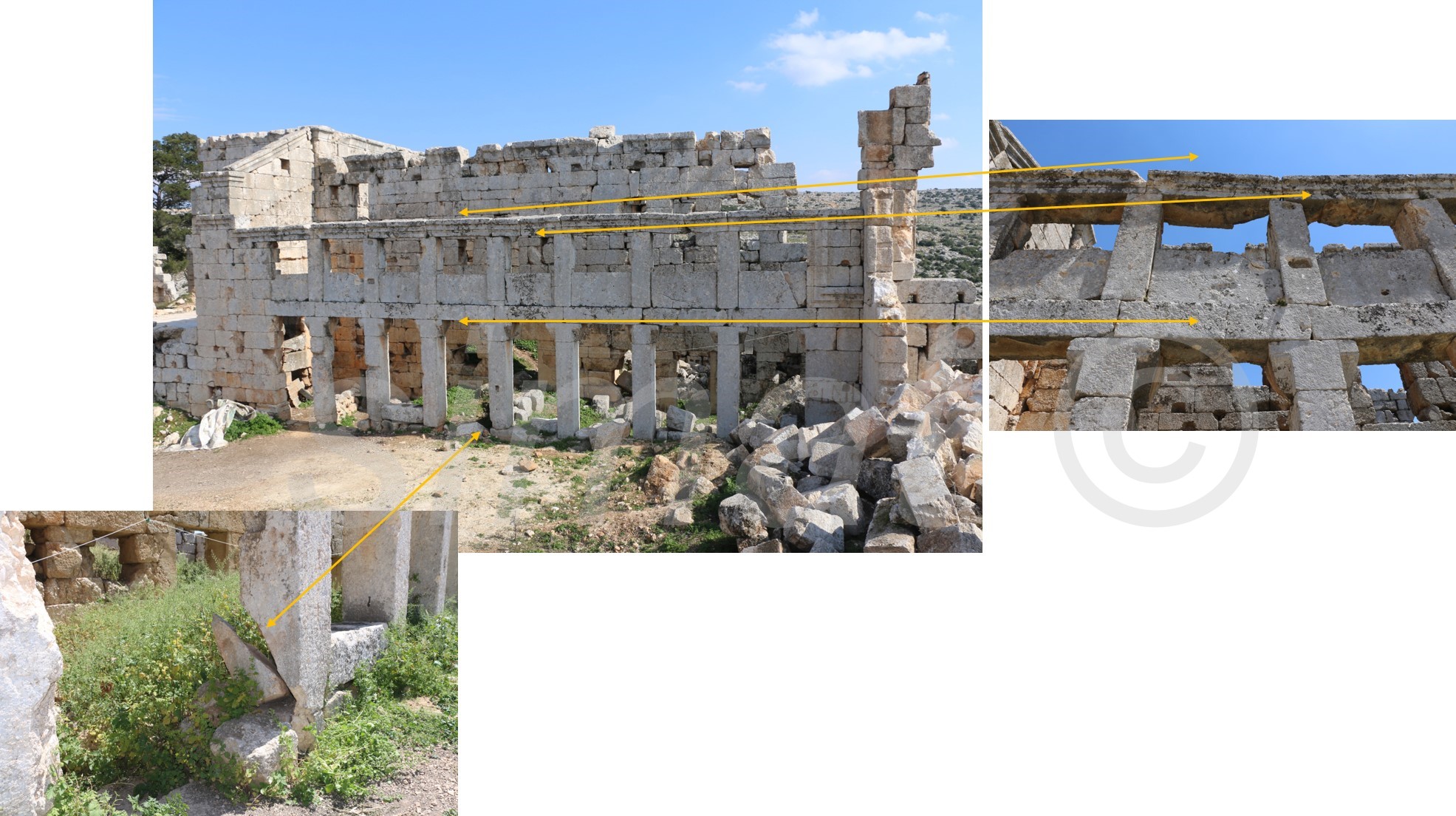
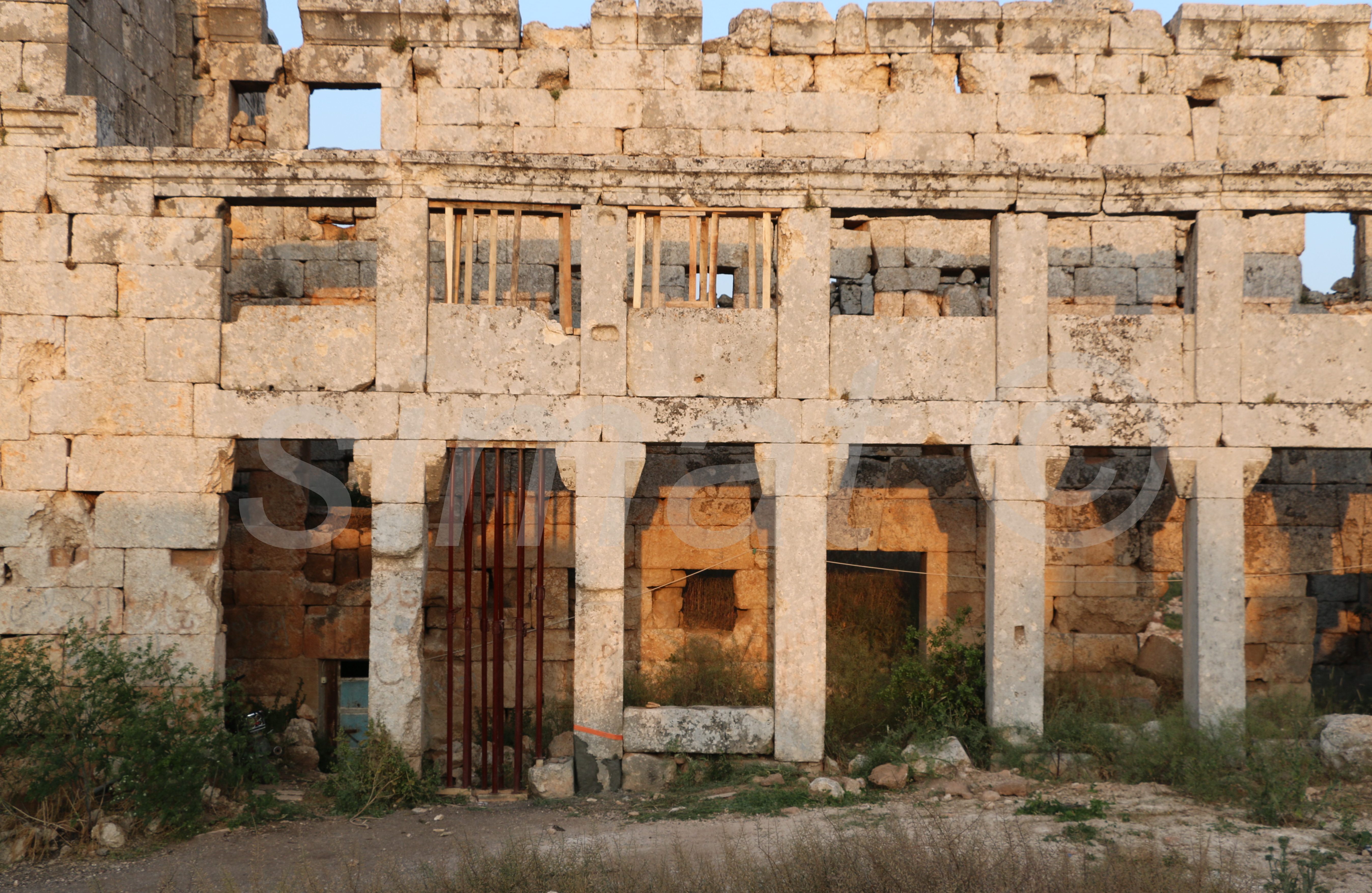
- The Eastern Portico of the Monastery Building (Southeast of Saint Simeon’s Church): This is a long portico in front of several monastery rooms, consisting of stone pillars supporting large lintels topped by stone panels as barriers. The portico is preserved on two levels of columns and lintels. The monastery building had previously sustained damage from shelling that led to the collapse of the southern portico, preserved over three floors, and the collapse of the facades of the rooms to the west.

The earthquake caused additional cracks in some of the stone pillars and lintels.
Collapse of Walls in the Hostelry Building (west of the Baptistery): This area, located in the middle of the castle, had been subjected to manual, clandestine excavations beneath the walls and inside the rooms, exposing the building’s foundations, which had led to weakening those Foundations and diminishing their resistance to the earthquake, leading to the collapse of parts of the structure.

Falling Stones from Some Facades and High Buildings: The earthquake caused scattered and limited collapses of stones in different parts of the castle, such as the upper sections of the western facade of the western basilica, the northern wall of the castle near the priestly tomb, the collapse of part of the eastern facade wall of the monastery, in addition to limited collapses in some of the castle’s buildings.

Risks:
Following the earthquake, a misguided intervention occurred by the castle’s security guards, who removed the collapsed stones in some parts, including the base of the Column of Saint Simeon, which holds symbolic importance.

) They also attempted to demolish the eastern portico of the monastery, fearing its collapse due to aftershocks, and they were insistent on removing it for their personal safety. In order to allay their fears, we made an urgent intervention to support this part of the building, even though these cracks are likely stable and do not pose a danger to the building’s safety. The intervention aimed to prevent further inappropriate and violent actions by the military elements present at the castle.
Protection Measures:
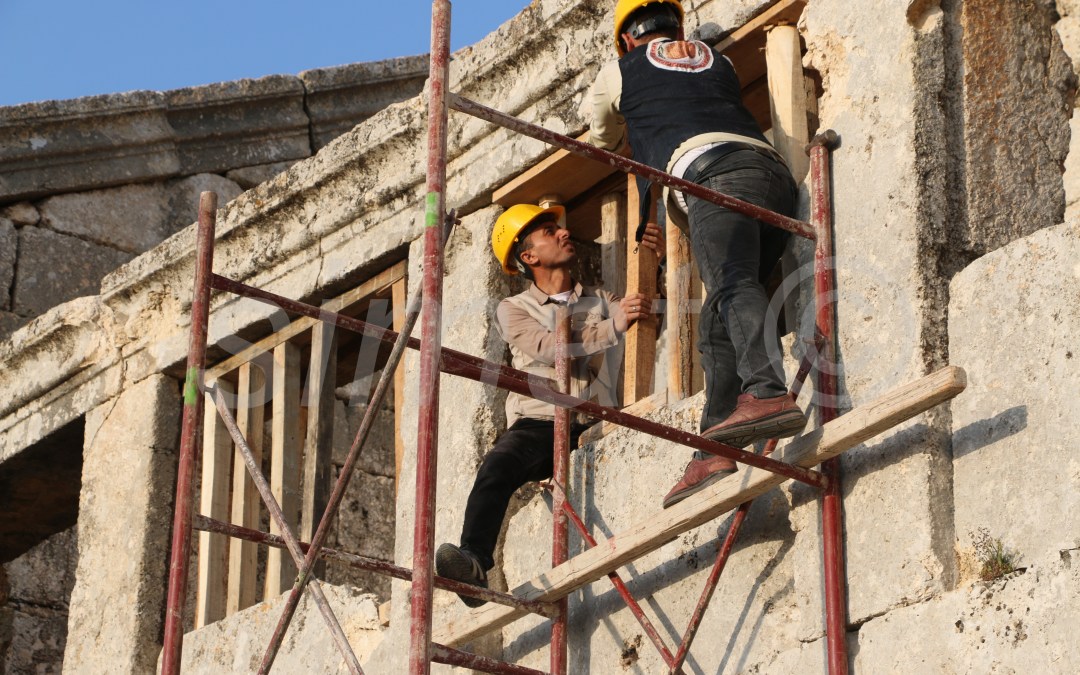
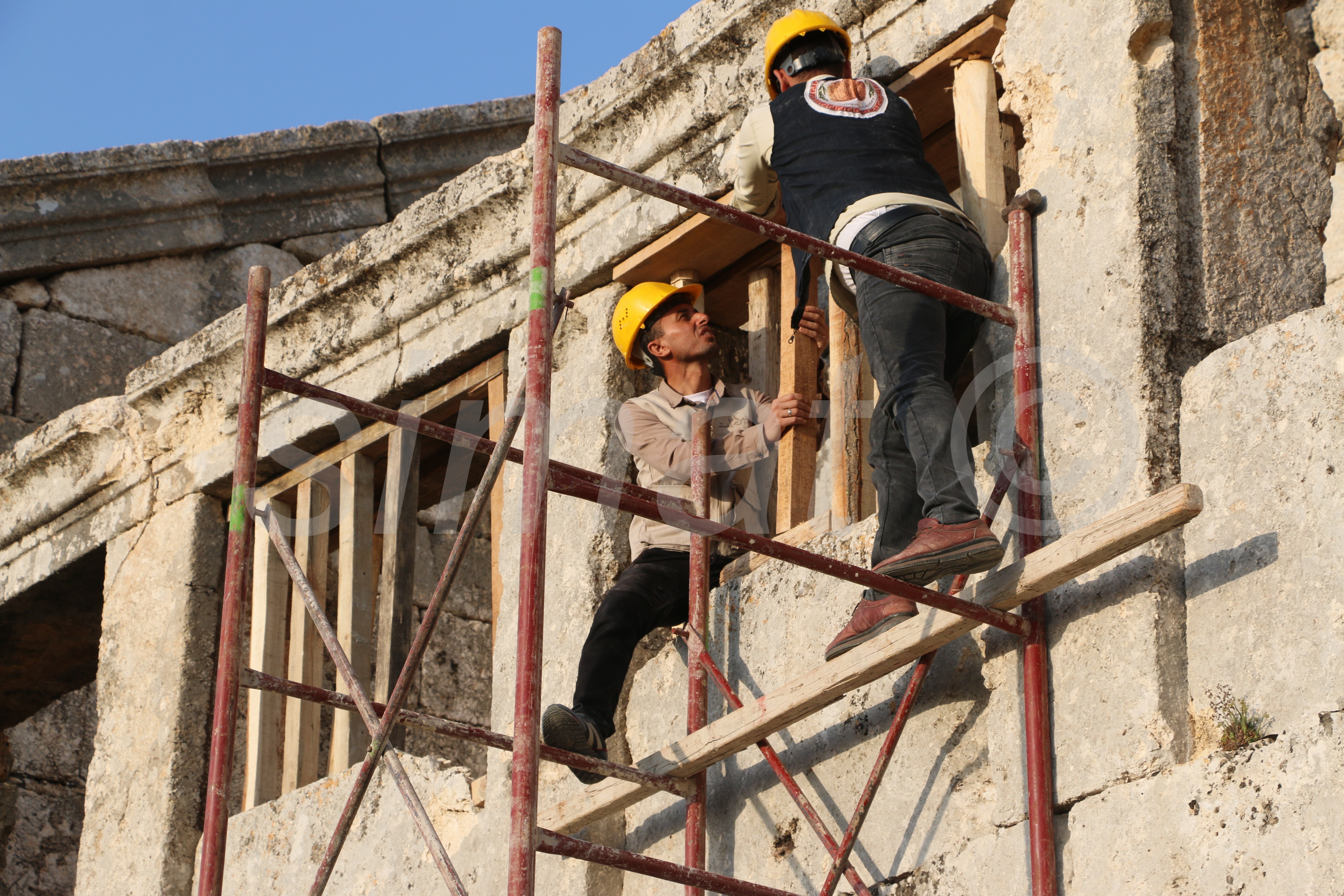
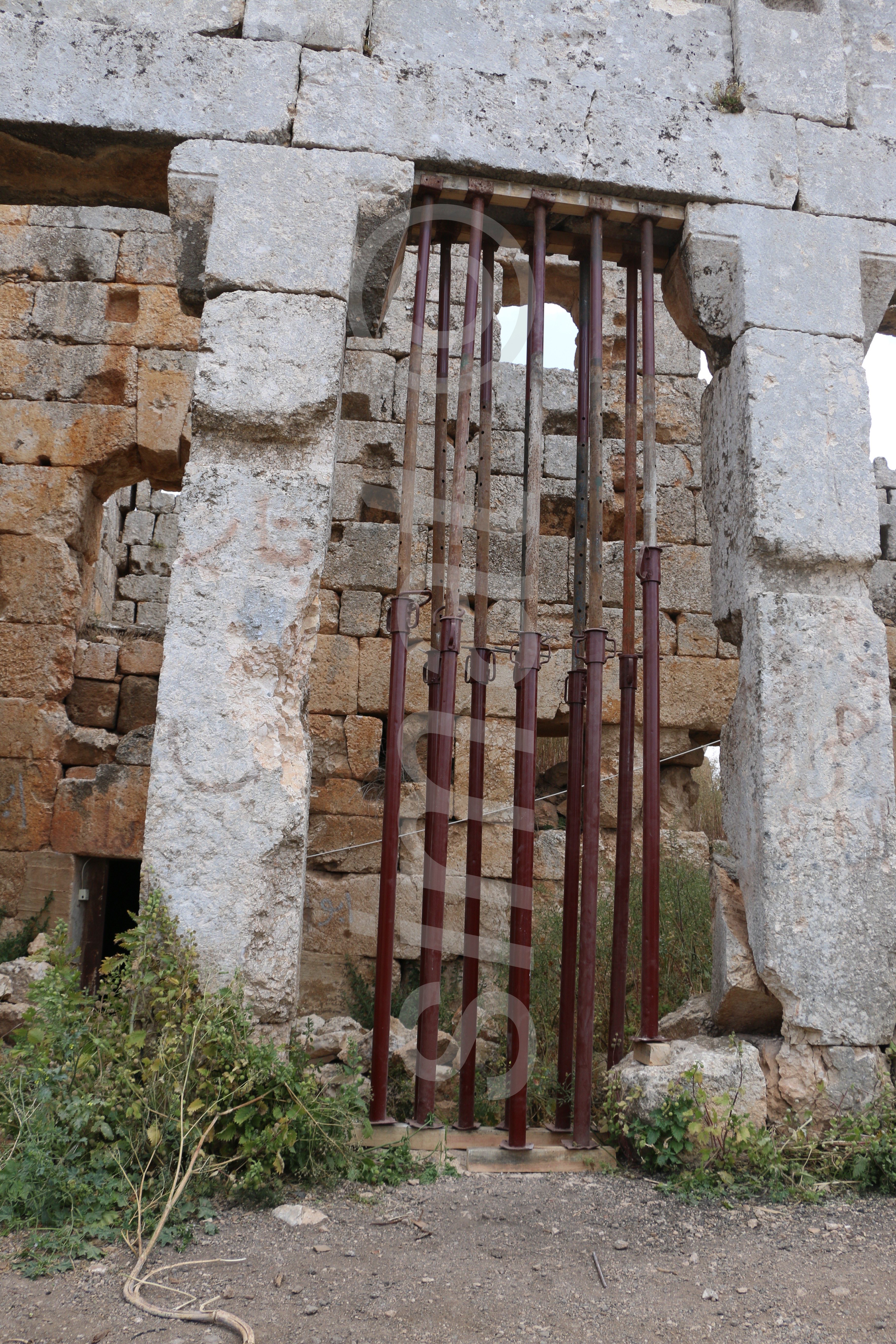
In mid-May 2023, we began intervention at Qal’at Sim’an to stabilize the current condition, address earthquake damage, and prevent inappropriate interventions in the castle. This was achieved by strengthening the eastern wall of the monastery building’s portico and reducing the concerns of those present in the castle about the risk of collapse. We conducted full documentation of the work area and set up a rapid action plan to support and strengthen the damaged parts by:
- Supporting the damaged lintel with iron columns equipped with wooden beams separating the iron from the ancient stone, ensuring flexibility in cases of expansion and contraction due to weather conditions.
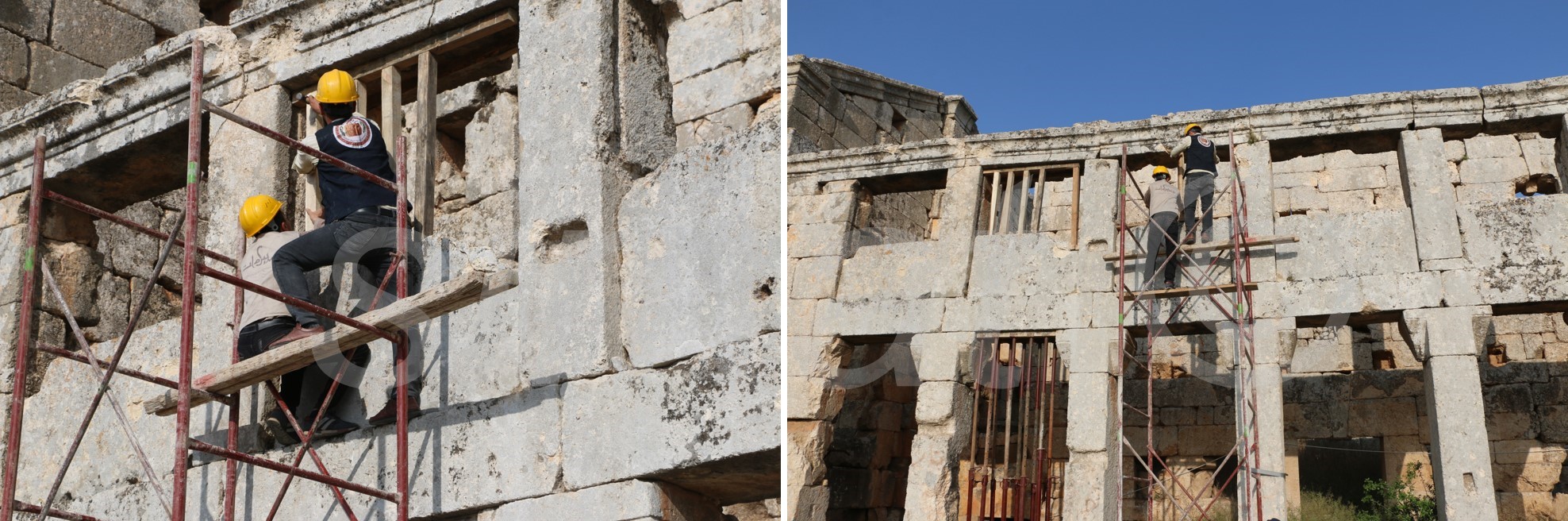
Supporting the lintels on the upper floor with horizontal and vertical wooden supports.
- Injecting the cracks in the support with mortar.
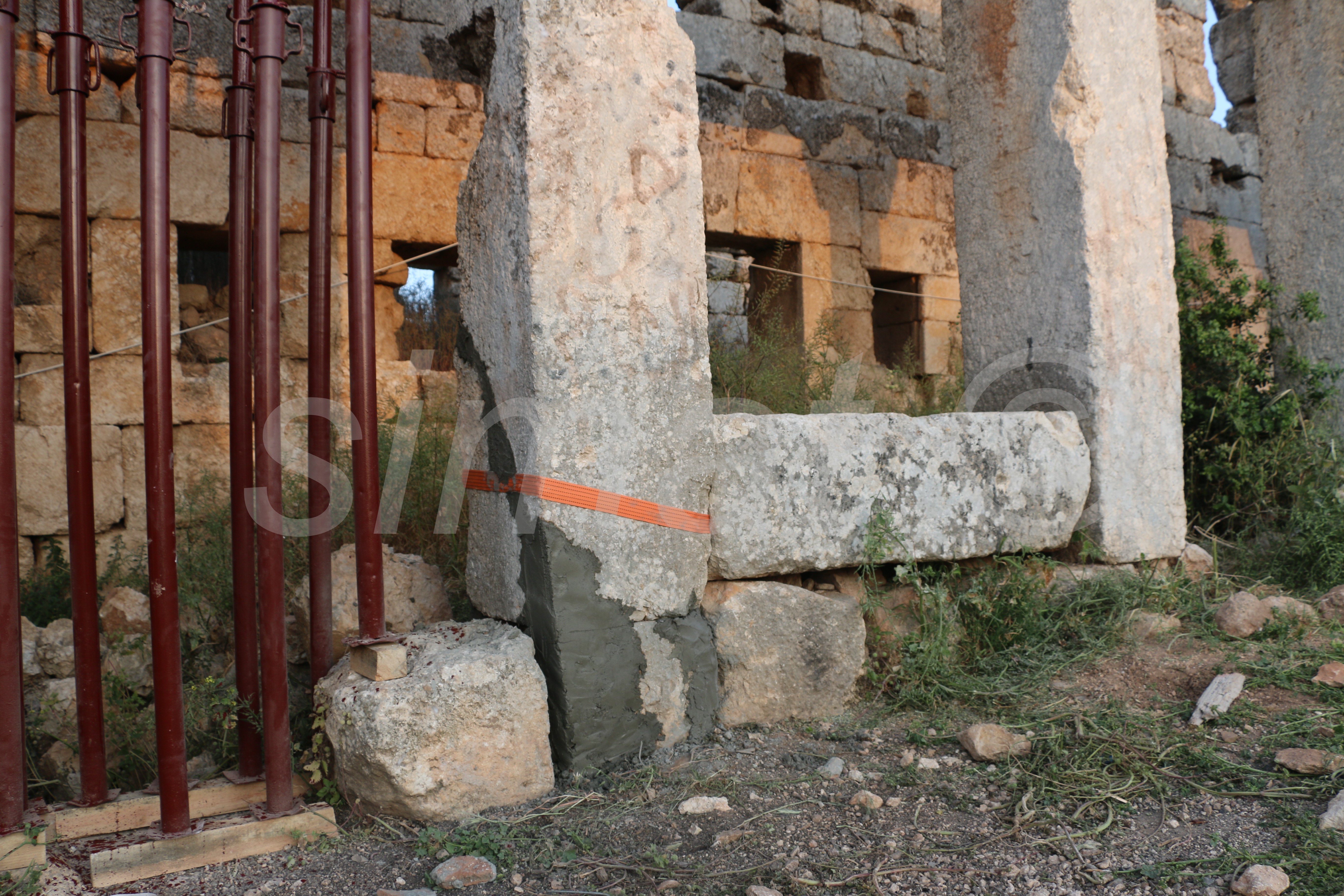
Reattaching and connecting the collapsed part of the base of the support using adhesive material and repointing with cement. This part was previously separated from the base of the support by an inclined crack, but during the earthquake, it separated completely and fell to the ground.
Conclusion:
The completed work at Qal’at Sim’an was part of the emergency response by SIMAT Organization after the earthquake, as the situation required quick and bold steps to deal with the disaster’s effects. Although these measures do not match the extent of the damage caused by the earthquake, they are temporary until a scientifically studied action plan is prepared and financial and technical support is provided to mitigate the disaster’s damages. Unfortunately, at the time of publishing this report, more than a year and a half after the earthquake disaster, there has been no international or local response at Qal’at Sim’an or other damaged archaeological sites in northwestern Syria. We hope that there will be a genuine response soon to preserve this world heritage monument before the loss of many architectural elements that are capable of restoration and reconstruction, especially in light of the current conditions of ongoing war in the region, which suffers from administrative chaos and the absence of an archaeological authority.