

Prepared by: Ammar Kannawi
Translated by:Wael Alokla
Introduction
Palmyra is one of Syria’s most important archaeological sites and is considered to be a significant contributor to its economy. As Syria’s most popular site to foreign tourists, it boasts unique architectural landmarks and exceptional preservation, serving as a model for Roman cities with a distinctive Eastern character in the Syrian desert. The ancient city was inscribed on the UNESCO World Heritage List in 1980.
Palmyra holds immense symbolic value for the Syrian people, forming a part of their living memory and a source of pride. Its cultural and symbolic significance made it a focal point during the Syrian war. The city suffered considerable damage from clashes, shelling, and looting during the early years of the Syrian uprising. However, the most severe event was the deliberate destruction by the Islamic State (IS). Additionally, the former Syrian regime politicized Palmyra’s antiquities for political gains, while its allies, such as Russia and Iran, sought control over the archaeological site for strategic purposes. Russia established a military base within the archaeological zone, while the Iranian militias occupied parts of the city after displacing its residents. (Photo 1)

- Palmyra’s Antiquities Under IS Control (2015–2017)
IS captured Palmyra for the first time in May 2015. Syrian regime forces, supported by Russia and Iran, retook the city in March 2016. However, IS regained control in December 2016 before being expelled permanently in March 2017. IS exploited Palmyra’s antiquities for propaganda purposes, destroying key landmarks like the Temple of Bel, the Arch of Triumph, the Tetrapylon, and several tower tombs. They also used the theatre to execute prisoners, such as the brutal execution of 80-year-old archaeologist Khaled al-Asaad. Reports also indicate IS engagement in extensive looting, especially in the necropolis. The city endured heavy shelling by Syrian and Russian forces during the recapture, causing extensive damage to its antiquities. The Palmyra Museum was partially destroyed, and Fakhr al-Din Castle suffered significant damage. IS mined and booby-trapped the archaeological site before retreating. Figure 1

- Palmyra’s Antiquities Under Regime and Allied Control (2017–2024)
The atrocities committed by IS garnered widespread international sympathy for Palmyra. The Assad regime sought to capitalize on this sentiment, portraying themselves as the savior of the city’s antiquities. This has been celebrated by some international actors who have overlooked the regime’s role in the destruction of Syria’s cultural heritage, particularly in Aleppo in 2016. In its bid to restore Palmyra, the regime announced ambitious rehabilitation plans, raising concerns in academic circles about its ability to execute them, given the ongoing conflict and the extent of the damage.
Russia took control over the restoration efforts, signing agreements with institutions like the Hermitage Museum, the Russian Academy of Sciences, and a Russian stone manufacturing company. These projects included a three-phase restoration of the Arch of Triumph in cooperation with the Syrian Secretariat for Development and the Syrian Ministry of Culture. The first two phases, namely sorting and documenting the stones and preparing plans, are completed. The final phase of the reconstruction of the arch has been delayed. Additionally, the restoration of the historical Afca spring was completed by the General Directorate and the Russian Society for the Preservation of Historical and Cultural Heritage, an essential project for the city’s economy and surrounding palm groves.
Other international actors also participated in restoration efforts. The Hermitage Museum signed an agreement with the Amman National Museum to restore 200 Syrian artefacts, including Palmyrene sculptures. The restoration of the statue of Asad al-Lat, which was damaged in 2015 after ISIS took control, was transferred to the Damascus Museum in 2017 by UNESCO and funded by the European Union. The restoration was supervised by conservators from Poland and was displayed in the garden of the Damascus Museum.
- The Current State of Palmyra’s Antiquities After Liberation
A field visit by SIMAT and colleagues from the Idlib Antiquities Center provided preliminary observations of Palmyra’s current archaeological condition, independent of the regime’s and Russia’s narratives. Despite the significant destruction, Palmyra’s antiquities still exude visual splendor and historical grandeur. The findings are as follows:
- Palmyra Museum
The museum remains under the protection of antiquities guards but lacks military oversight despite its necessity. Administrative staff are absent, and no restoration work has been conducted since the conflict. Some artifacts remain in the museum, though many were relocated to Damascus earlier. No restoration or rehabilitation work has been carried out in the museum, the hole caused by the aerial bombardment in the museum’s roof is still there and has been sealed with metal plates. (Photo 2).
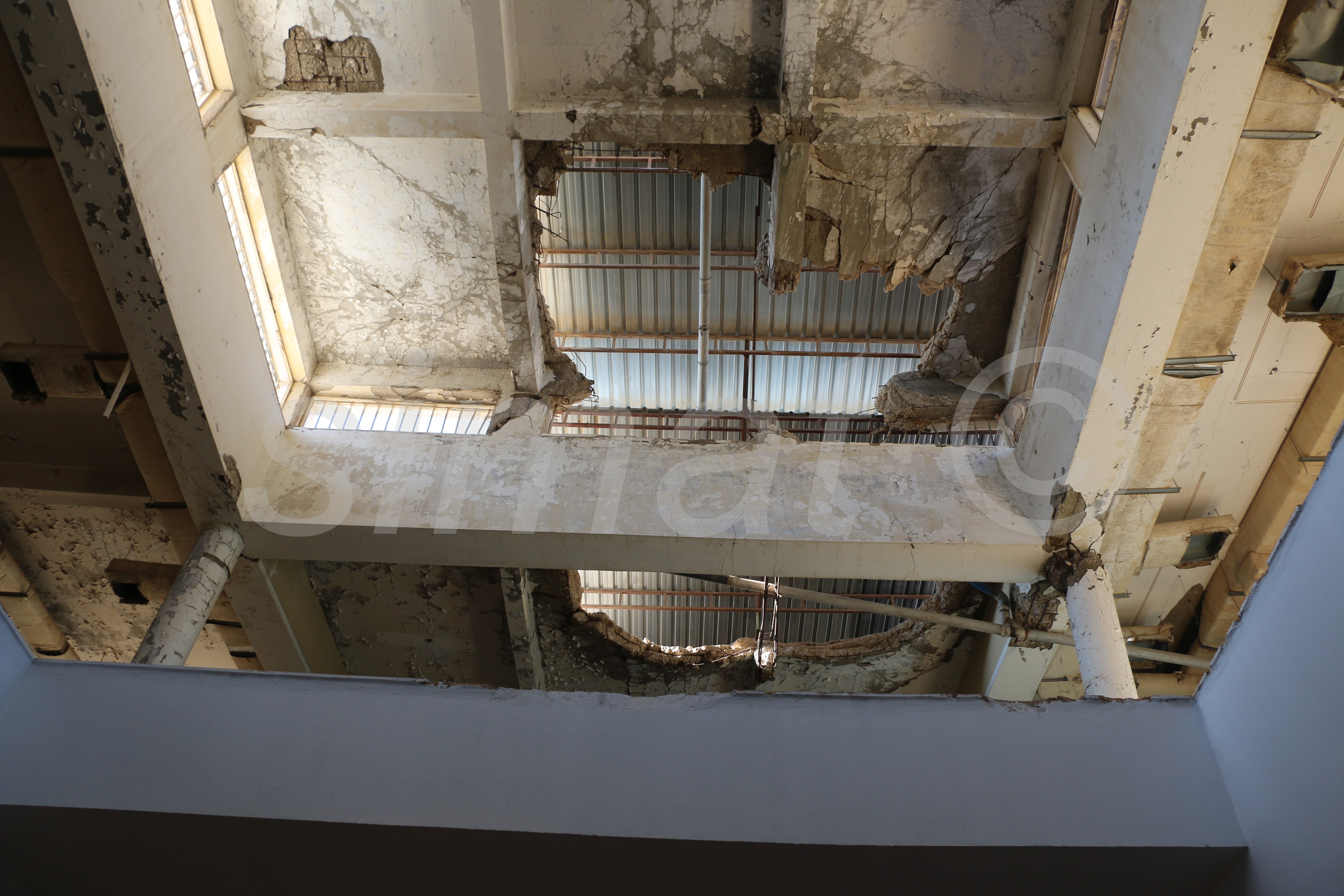
The museum’s collections, especially the funerary sculptures that were transferred to the Damascus Museum before ISIS took control of the city, have not yet been recovered. In other words, the museum is currently not functioning. However, the museum still has an important collection of sculptures and funerary families, some of which were mutilated by ISIS in the past. (Photo 3)

- Fakhr al-Din Castle
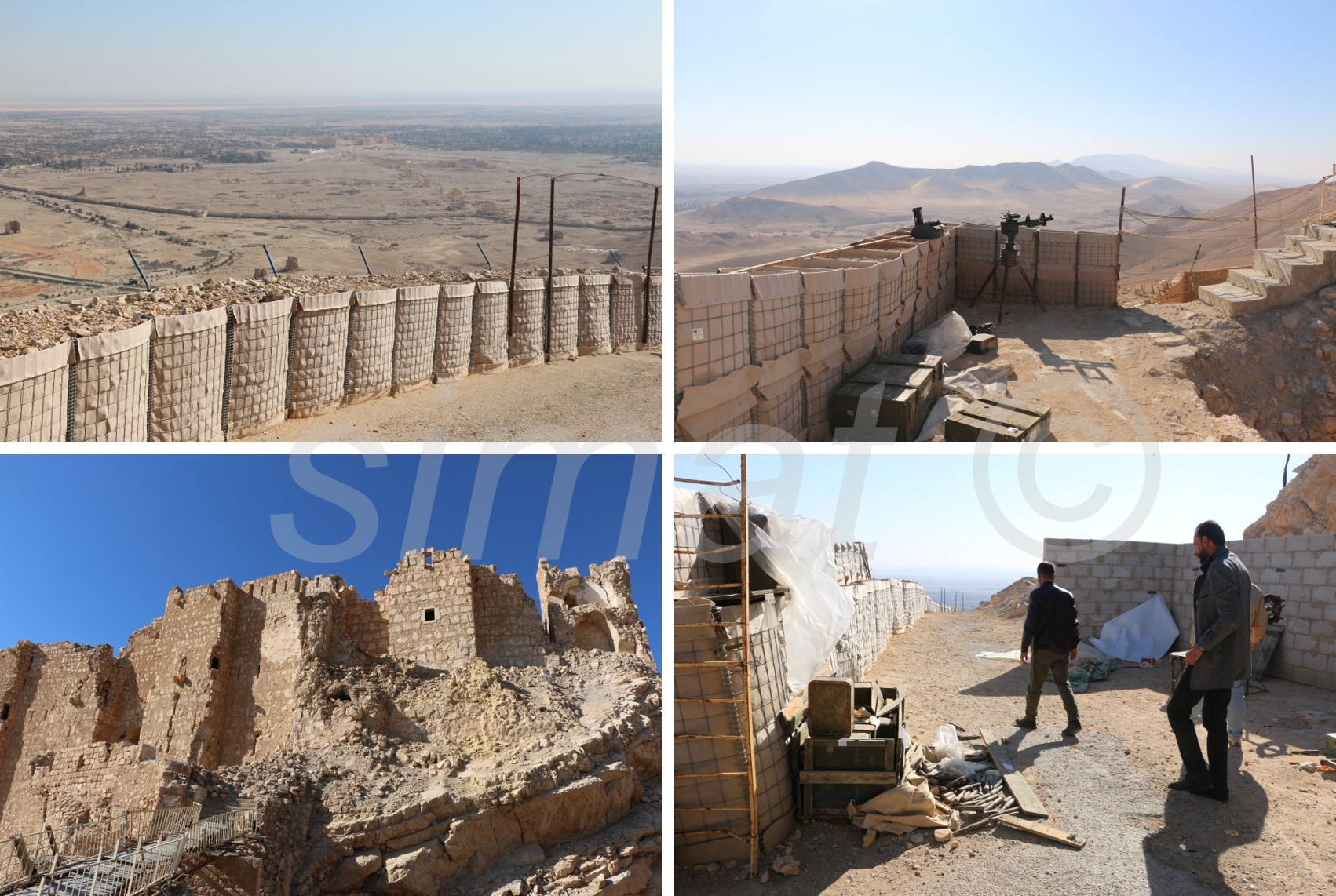
The citadel was damaged by Russian airstrikes during the period when ISIS took control of the city in 2015. The castle’s entrance tower has not yet been restored due to the difficulty of accessing the interior of the citadel. Additionally, a military base was also established nearby, the traces of which can still be seen, having been abandoned by regime fighters as they withdrew from the city. (Photo 4)
- The Walled City
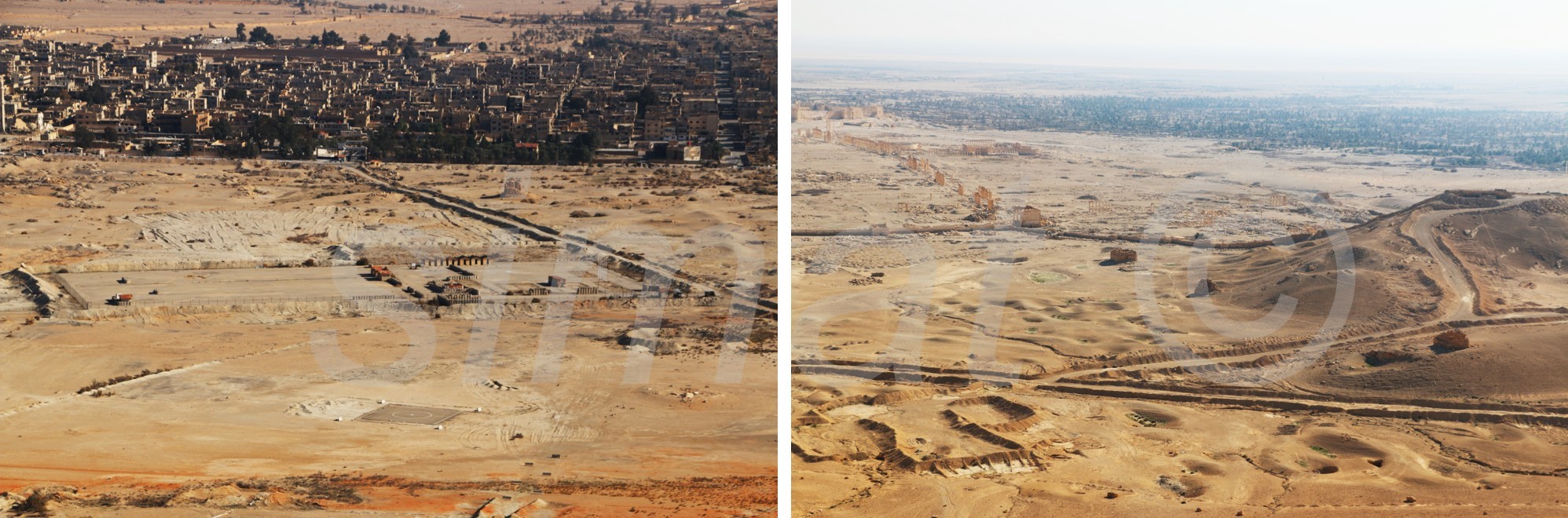
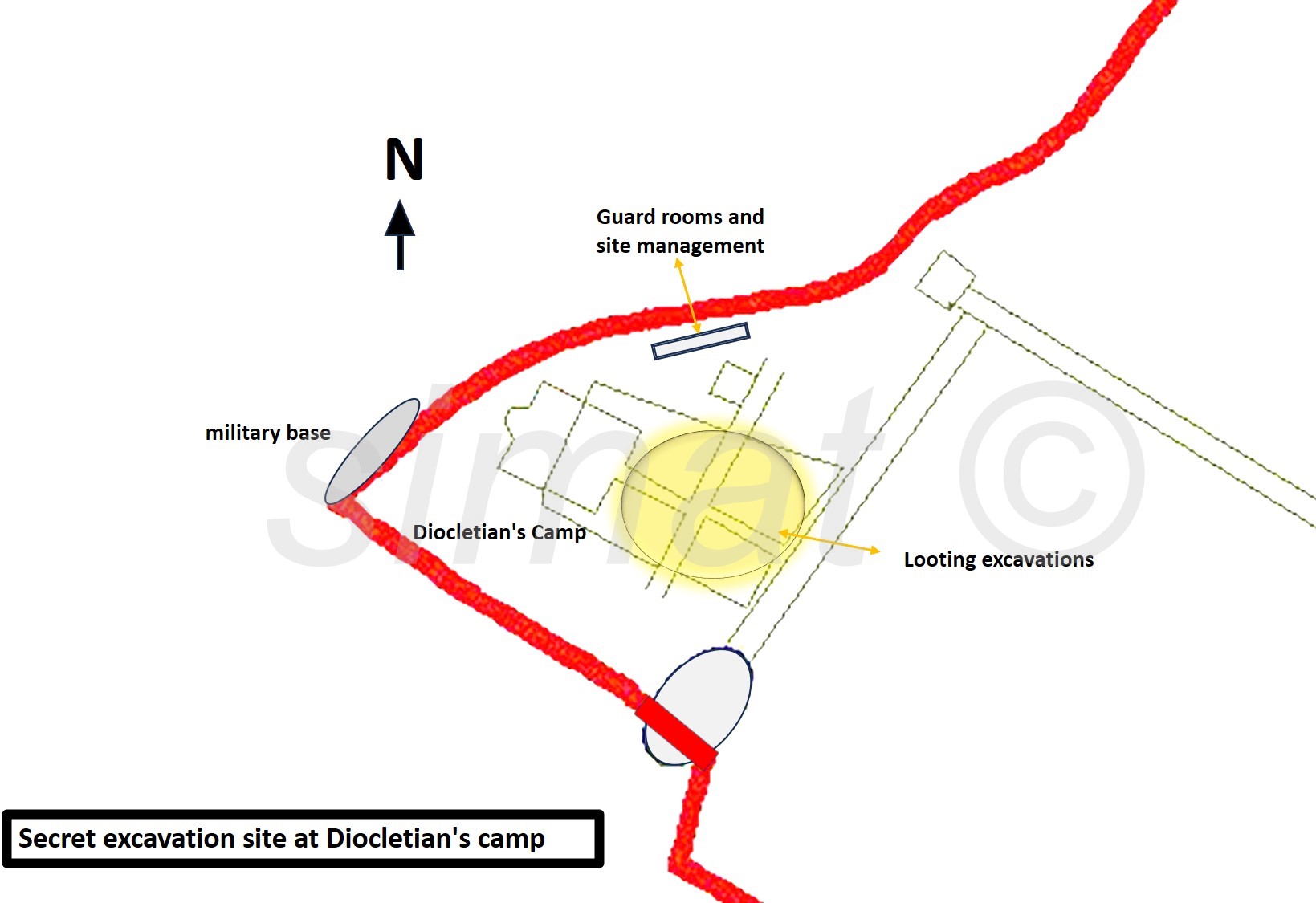
There is currently no military presence within the archaeological site. Figure 2 Russian forces have vacated a nearby base, though large-scale excavation and fortifications occurred during their occupation. (Photo 5).
In addition, there is an absence of any archaeological or administrative personnel from the Directorate of Antiquities at the site, including the guards of the archaeological site. (Photo 6)

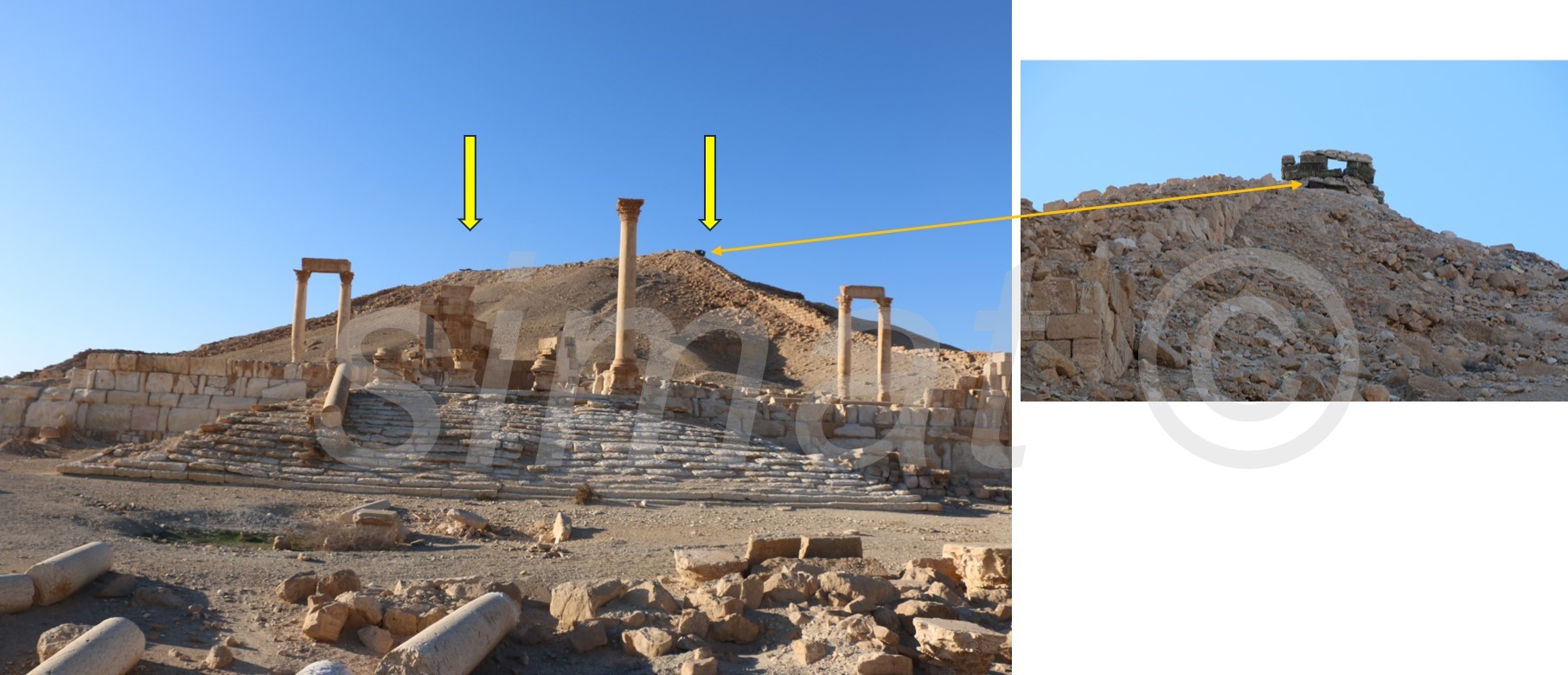
The visitor center (Museum of Folklore) is currently closed. On top of the city wall in the far northwest corner, behind the Camp of Diocletian, there are military bunkers and fortifications, that have recently been withdrawn. (Photo 7)
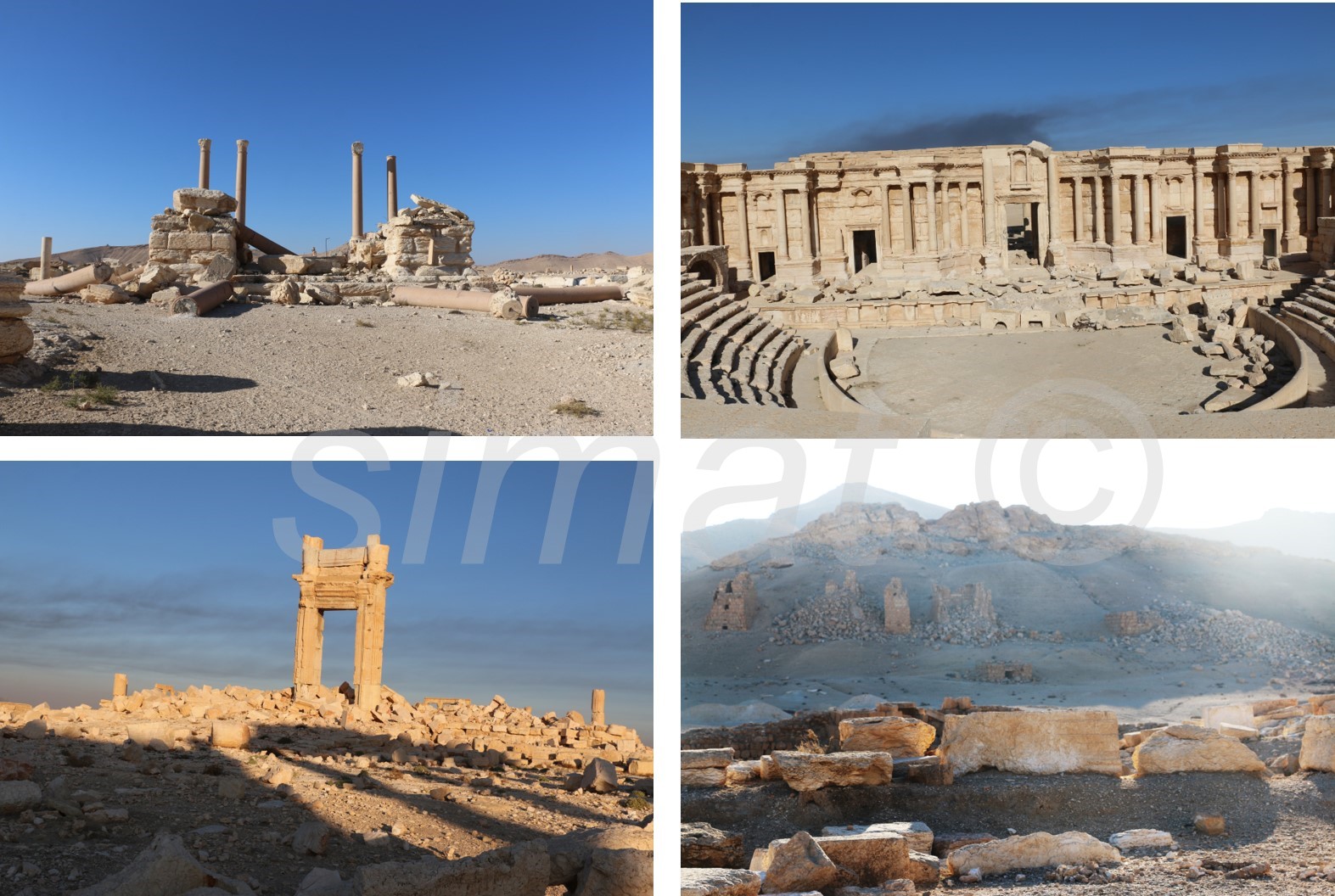
Iconic monuments destroyed by ISIS remain largely untouched, except for the Arch of Triumph, where rubble sorting and stone numbering have occurred. (Photo 8)

There were also documentation works in the northern part of the city where measurement marks are affixed to the stones of buildings. (Photo 9)

The rest of the destroyed monuments remain intact, such as the theatre facade, the tetrapylon, the temple structure of Bel and Baal, as well as the tower tombs. (Photo 10)
- Looting and Illegal Excavations
A few excavations on the straight road took place at an earlier date. (Photo 11)

However, the most significant encroachment is the presence of extensive excavation at the Camp of Diocletian, where a relatively large area was excavated, most likely by hand. (Photo 12)
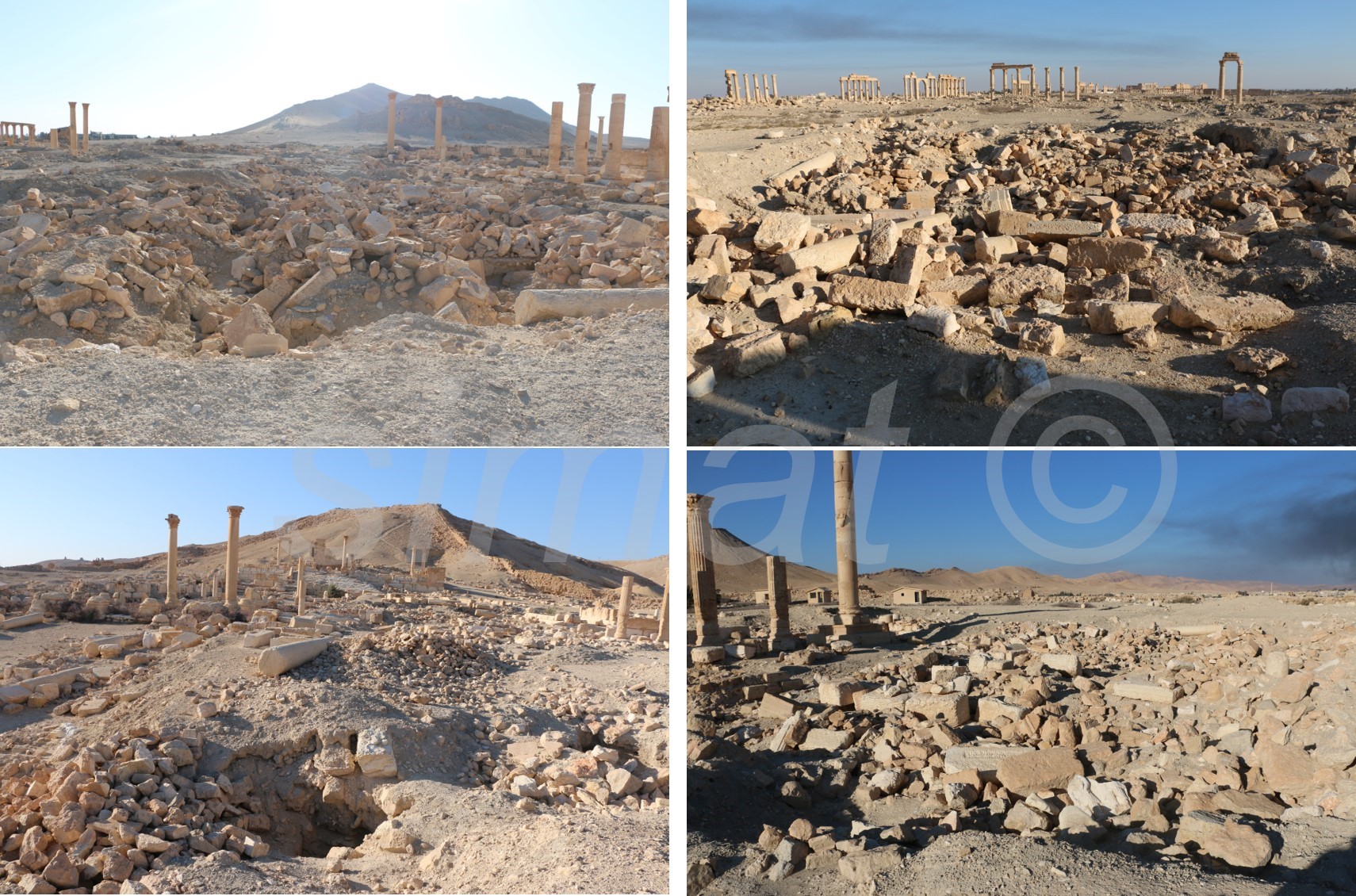
These excavations revealed Roman tombs, as seen through the architectural remains destroyed by the excavation. The debris and excavation sections indicate that the excavation work was carried out not long ago, perhaps a few months ago. The excavation area is located near the Assad regime’s military fortifications, which overlook the area from the top of the walls. Figure 3
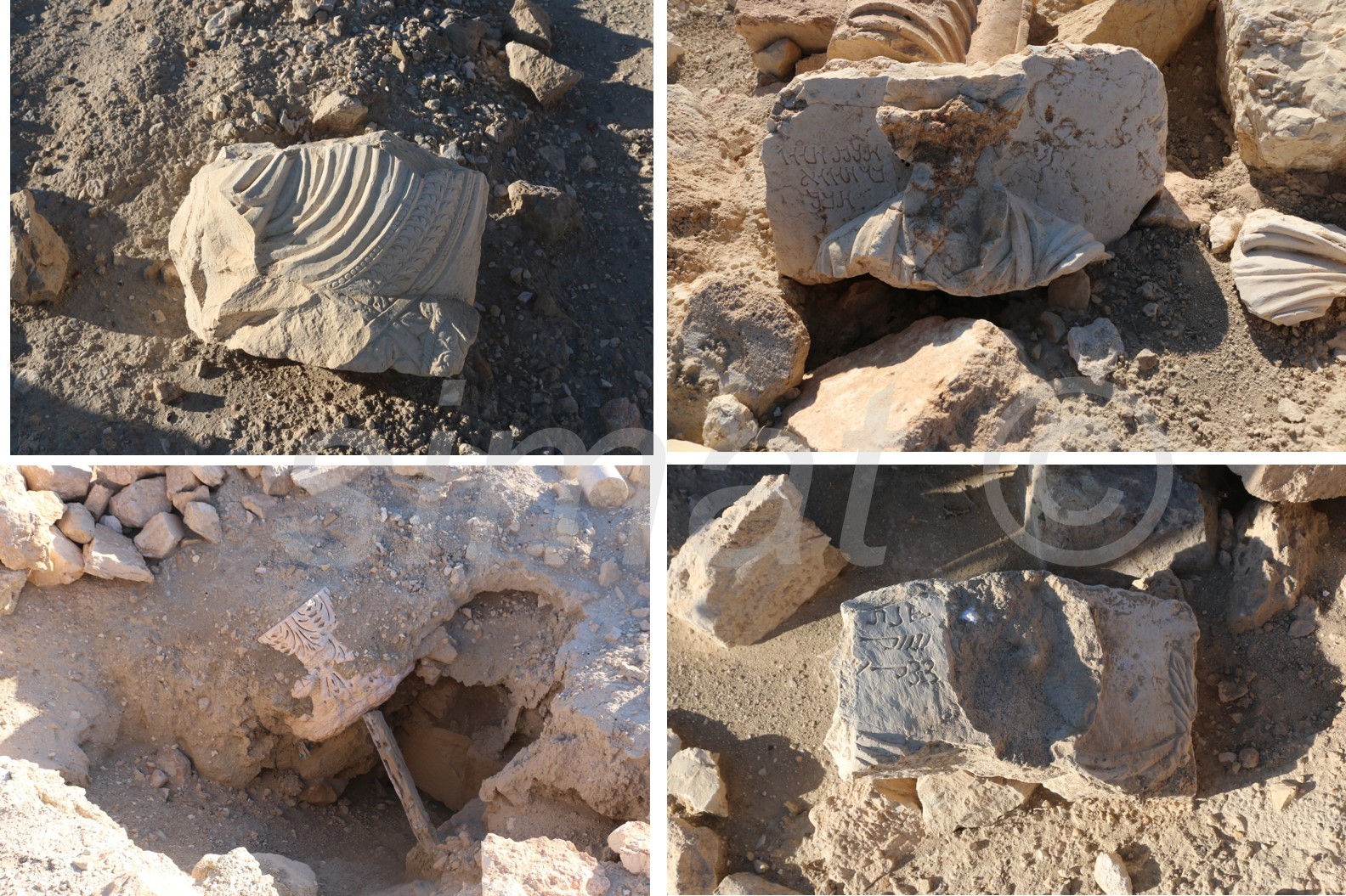
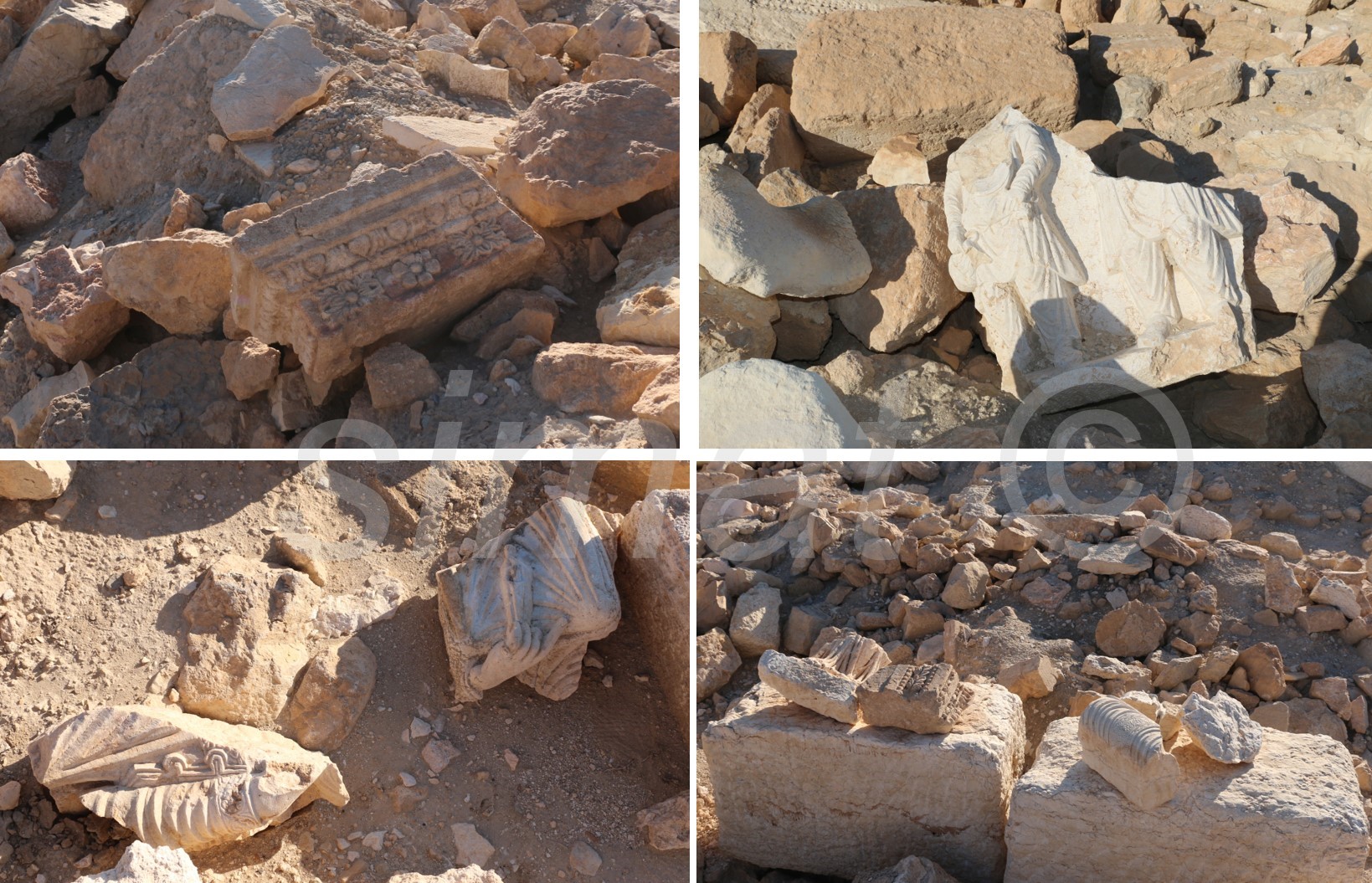
This indicates that the excavation work in this area was carried out under the supervision of the regime forces. Surprisingly, many valuable stones and fragments of sculpture still scattered in the area, which indicate that this excavation area was not documented or observed by archaeological authorities. (Photo 13/14)
- Conclusions
Over seven years of regime and Russian control, little progress has been made in restoring Palmyra’s antiquities, despite various attempts to politicize Palmyra’s heritage and mobilize support and funding for restoration projects. The restoration efforts during this period were largely limited to documentation work except for the Arc de Triomphe. On the other hand, the presence of the archaeological authority at the site has been weak throughout the past period, as the site was under the guardianship of the Russian base and some units of the Assad regime forces. This is confirmed by the excavation and looting at the Camp of Diocletian, which took place over a relatively long period of time.
Palmyra requires extensive international support in terms of expertise, funds, studies and scientific documentation in a professional manner. It also requires political stability in Syria before restoration work can begin.
- Recommendations
With the triumph of the Syrian revelation and the fall of the Assad regime, Syria is expected to experience some political stability after 13 years of war. This provides the ideal opportunity to readdress the restoration fill of Palmyra, prioritizing the following points:
- Reassessing the restoration plans and agreements, particularly those involving Russian parties, as they are expected to withdraw from these agreements.
- Securing the archaeological sites with adequate protection, including military personnel and specialized antiquities guards.
- Documentation and evaluation of the sites before initiating large-scale restoration projects.
- Launching an international appeal for support and expertise.